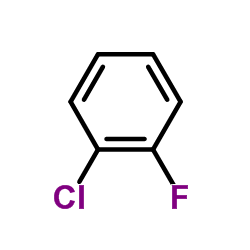
1-Chloro-2-fluorobenzene
- CAS No.348-51-6
- GradeIndustrial / Pharmaceutical
- Availability● In Stock
High purity 1-Chloro-2-fluorobenzene (CAS 348-51-6) supplied for advanced organic synthesis. Ideal building block for pharmaceutical and agrochemical intermediates with strict quality control.
Request Bulk PricingProduct Technical Details
Product Overview
1-Chloro-2-fluorobenzene is a premier halogenated aromatic compound serving as a critical building block in modern organic synthesis and industrial chemistry. Manufactured under strict quality control standards, this chemical intermediate facilitates the introduction of both chlorine and fluorine substituents onto aromatic rings, enabling the construction of complex molecular architectures required in advanced material science and life sciences. Our facility ensures consistent batch-to-batch reliability, making this product an ideal choice for large-scale industrial processes where reproducibility is paramount.
The compound is characterized by its high stability and specific reactivity profile, suitable for nucleophilic aromatic substitution and various cross-coupling reactions. As a trusted global manufacturer, we prioritize safety and compliance in every stage of production, ensuring that our clients receive materials that meet international regulatory standards for chemical handling and processing.
Technical Specifications
| Parameter | Value |
|---|---|
| CAS Number | 348-51-6 |
| Molecular Formula | C6H4ClF |
| Molecular Weight | 130.55 g/mol |
| Appearance | Colorless to light brown transparent liquid |
| Purity | ≥99.0% |
| Boiling Point | 137-138 °C |
| Melting Point | -43 to -42 °C |
| Density | 1.244 g/mL at 25 °C |
| Refractive Index | 1.501 |
Industrial Applications
This versatile intermediate finds extensive utility across multiple high-value sectors due to its unique substitution pattern. In the pharmaceutical industry, it serves as a key precursor for synthesizing active pharmaceutical ingredients (APIs), particularly those requiring specific halogen positioning for biological activity and metabolic stability. Additionally, it is employed in the agrochemical sector for developing novel crop protection agents and herbicides.
- Pharmaceutical intermediate synthesis for kinase inhibitors
- Agrochemical formulation development and research
- Organic fluorescence material production
- Custom chemical synthesis projects and process optimization
- Liquid crystal material manufacturing
Chemists utilize this reagent for palladium-catalyzed coupling reactions, including Suzuki and Buchwald-Hartwig protocols, to construct biaryl systems. The presence of both fluorine and chlorine atoms allows for selective functionalization, providing synthetic flexibility that is highly valued in process chemistry and drug discovery pipelines.
Quality Assurance and Packaging
We adhere to international quality management systems to guarantee product integrity and customer satisfaction. Each batch undergoes rigorous testing via Gas Chromatography (GC) and High-Performance Liquid Chromatography (HPLC) methods to confirm purity levels meet or exceed specifications. Comprehensive documentation, including Certificate of Analysis (COA) and Material Safety Data Sheet (MSDS), is provided with every shipment to facilitate regulatory compliance.
Standard packaging consists of 25kg drums, designed to maintain chemical stability during transit and storage. For larger volume requirements, flexible bulk packaging options such as ISO tanks are available upon request. Our logistics team ensures timely delivery while complying with all hazardous material transportation regulations across global shipping lanes.
Storage and Handling
To maintain optimal quality and safety, store this product in a cool, dry, and well-ventilated area away from incompatible substances such as strong oxidizing agents. The recommended storage temperature is between 2-8ºC to prevent degradation over extended periods. Containers must remain tightly closed when not in use to prevent moisture absorption or contamination from environmental particulates.
Personnel should handle this chemical with appropriate personal protective equipment (PPE), including chemical-resistant gloves and safety goggles, in accordance with safety guidelines. In case of spillage, absorb with inert material and dispose of according to local environmental regulations. Our technical support team is available to provide guidance on safe handling practices and emergency response procedures.