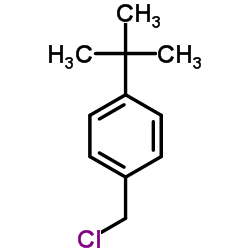
1-tert-Butyl-4-(chloromethyl)benzene
- CAS No.19692-45-6
- GradeIndustrial / Pharmaceutical
- Availability● In Stock
High purity 1-tert-butyl-4-(chloromethyl)benzene (CAS 19692-45-6) designed for pesticide and pharmaceutical synthesis applications.
Request Bulk PricingProduct Technical Details
Product Overview
1-tert-Butyl-4-(chloromethyl)benzene, frequently recognized by its synonym p-tert-butylbenzyl chloride, stands as a critical building block in modern organic synthesis. This colorless to light yellow clear liquid is engineered for high reactivity, making it an indispensable precursor in the manufacturing of complex agricultural and pharmaceutical compounds. Our facility produces this intermediate under strict quality control protocols to ensure consistent molecular integrity and performance across diverse chemical reactions.
As a chloromethylated aromatic compound, it offers superior stability and handling characteristics compared to similar benzyl halides. The presence of the tert-butyl group enhances steric hindrance, which can be advantageous in specific substitution reactions required for fine chemical production. We prioritize industrial purity levels to minimize downstream purification burdens for our clients.
Technical Specifications
Quality assurance is paramount in our manufacturing process. Each batch undergoes rigorous testing using advanced chromatographic methods to verify compliance with international standards. The following table outlines the key physical and chemical properties typical of our premium grade supply:
| Parameter | Specification |
|---|---|
| CAS Number | 19692-45-6 |
| Molecular Formula | C11H15Cl |
| Molecular Weight | 182.69 g/mol |
| Appearance | Colorless to light yellow clear liquid |
| Assay (GC) | ≥99.0% |
| Boiling Point | 240.2±9.0 °C |
| Density | 1.0±0.1 g/cm3 |
| Flash Point | 94.4±0.0 °C |
Industrial Applications
This versatile intermediate serves as a key substrate in the synthesis of high-value agrochemicals and therapeutic agents. Notably, it is utilized in the production of Pyridaben, a widely used acaricide in modern agriculture. Furthermore, it plays a significant role in the pharmaceutical sector, acting as a precursor for various antihistamine therapeutics and other medicinal compounds. By providing a high-purity starting material, we enable efficient synthesis routes for downstream manufacturers.
- Agrochemical synthesis including acaricides and pesticides.
- Pharmaceutical intermediate for antihistamine agents.
- Organic synthesis for fine chemicals and specialty polymers.
- Research and development in medicinal chemistry.
Quality Assurance and Packaging
We understand that consistency is vital for industrial processes. Our quality management system ensures that every drum meets the specified assay and impurity profiles. Impurities such as benzal chloride and chlorotoluene are strictly controlled to levels below 0.25% and 0.15% respectively. We provide a comprehensive Certificate of Analysis (COA) with every shipment to guarantee transparency and traceability.
Our laboratory employs state-of-the-art Gas Chromatography (GC) and High-Performance Liquid Chromatography (HPLC) systems for analysis. Water content is monitored via Karl Fischer titration to ensure it remains below 0.03%. Acid value is controlled to prevent corrosion in reaction vessels. This attention to detail minimizes side reactions during your synthesis process, improving overall yield and reducing waste.
Standard packaging involves 25kg drums, designed to maintain product integrity during transit. Custom packaging solutions are available upon request to suit specific logistical requirements. Our global supply chain ensures timely delivery to manufacturers worldwide.
Safety and Storage
Proper handling is essential for safety. This chemical should be stored in a cool, dry, and well-ventilated area away from incompatible substances. Containers must remain tightly closed to prevent moisture ingress and contamination. Personnel should utilize appropriate personal protective equipment during handling.
Adherence to safety regulations is non-negotiable. The flash point of 94.4 degrees Celsius indicates combustible liquid characteristics. Therefore, storage areas must be equipped with fire suppression systems. Emergency eyewash stations and safety showers should be accessible. Waste disposal must comply with local environmental regulations to prevent ecological impact. We recommend consulting the Safety Data Sheet (SDS) before operation.