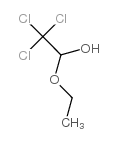
2,2,2-Trichloro-1-ethoxyethanol
- CAS No.515-83-3
- GradeIndustrial / Pharmaceutical
- Availability● In Stock
A high-purity chemical intermediate essential for the synthesis of agricultural protectants and veterinary pharmaceuticals. Available in bulk quantities with strict quality control.
Request Bulk PricingProduct Technical Details
Product Overview
2,2,2-Trichloro-1-ethoxyethanol represents a critical component in the realm of fine chemical synthesis and industrial organic chemistry. Known systematically as Chloral ethylalcoholate, this compound serves as a versatile building block for various downstream applications. Our facility specializes in the production of this high-purity intermediate, ensuring that every batch meets rigorous international standards for chemical manufacturing. The compound is characterized by its stability and reactivity profile, making it an ideal candidate for complex synthesis routes required in the agrochemical and pharmaceutical sectors.
We understand the importance of consistency in supply chain management for B2B clients. Therefore, our manufacturing process is designed to maintain strict control over impurities and physical properties. Whether you are scaling up production or requiring specialized batches for research and development, our team provides the technical support and material reliability necessary for successful project outcomes.
Technical Specifications
Quality assurance is paramount in chemical supply. Each lot of 2,2,2-Trichloro-1-ethoxyethanol undergoes comprehensive analytical testing to verify compliance with specified parameters. The following table outlines the key physical and chemical properties typically associated with our premium grade material.
| Parameter | Specification |
|---|---|
| CAS Number | 515-83-3 |
| Molecular Formula | C4H7Cl3O2 |
| Molecular Weight | 193.46 g/mol |
| Appearance | White to light yellow crystal |
| Assay (Purity) | ≥99.0% |
| Loss on Drying | ≤0.5% |
| Boiling Point | 116ºC at 760 mmHg |
| Density | 1.454 g/cm3 |
| Flash Point | 48.9ºC |
Industrial Applications
This chemical intermediate plays a pivotal role in the synthesis of various agricultural protectants and veterinary pharmaceutical agents. Its unique structural properties allow it to function effectively in the production of organophosphate insecticides and other crop protection solutions. Additionally, it is utilized in the manufacturing process of certain veterinary antibiotics, contributing to the global supply of animal health products.
Beyond agriculture, the compound finds utility in the synthesis of specialized polymers and fluoroplastics. Researchers and process engineers value this material for its predictable reaction kinetics and compatibility with standard industrial synthesis routes. Our clients leverage this intermediate to develop innovative formulations that meet evolving regulatory and performance benchmarks in their respective markets.
Quality Assurance and Safety
We adhere to strict quality management systems to ensure product integrity. Every shipment is accompanied by a Certificate of Analysis (COA) detailing the test results for purity, identity, and physical constants. Our laboratory employs advanced chromatographic and spectroscopic methods to detect even trace levels of impurities, guaranteeing that the material performs consistently in your downstream processes.
- Comprehensive QC testing for every production batch.
- Stability testing to ensure shelf-life reliability.
- Custom packaging solutions available upon request.
- Full regulatory documentation support for global shipping.
Storage and Handling
Proper storage is essential to maintain the quality of 2,2,2-Trichloro-1-ethoxyethanol. The material should be kept in a cool, dry, and well-ventilated area away from direct sunlight and heat sources. Containers must remain tightly closed when not in use to prevent moisture absorption and potential degradation. We recommend following standard safety protocols for handling chlorinated organic compounds, including the use of appropriate personal protective equipment during transfer and processing operations.