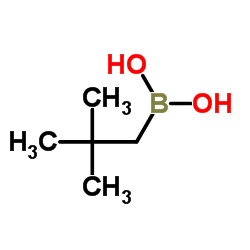
2,2-Dimethylpropylboronic Acid
- CAS No.701261-35-0
- GradeIndustrial / Pharmaceutical
- Availability● In Stock
High-purity 2,2-dimethylpropylboronic acid (CAS 701261-35-0), a valuable boronic acid intermediate for Suzuki-Miyaura cross-coupling reactions in pharmaceutical and agrochemical synthesis.
Request Bulk PricingProduct Technical Details
Product Overview
2,2-Dimethylpropylboronic acid, also known as neopentylboronic acid, is a sterically hindered aliphatic boronic acid widely employed as a key building block in modern organic synthesis. With its robust neopentyl backbone, this compound offers enhanced stability against protodeboronation and oxidation, making it particularly suitable for demanding cross-coupling protocols under rigorous reaction conditions.
Specifications
| Molecular Formula | C5H13BO2 |
|---|---|
| Molecular Weight | 115.97 g/mol |
| CAS Number | 701261-35-0 |
| Appearance | White to off-white solid |
| Purity (GC/HPLC) | ≥97% (Typical assay: 98.9%) |
| Melting Point | 85–89°C |
| Boiling Point | 191.7°C at 760 mmHg |
| Density | 0.905 g/cm³ |
| Flash Point | 69.7°C |
| Refractive Index | 1.409 |
Industrial Applications
This high-purity boronic acid serves primarily as a specialty intermediate in the synthesis of complex organic molecules. Its primary utility lies in palladium-catalyzed Suzuki-Miyaura cross-coupling reactions, enabling the formation of carbon-carbon bonds critical to active pharmaceutical ingredients (APIs), crop protection agents, and advanced materials. The neopentyl structure imparts steric bulk that can influence regioselectivity and metabolic stability in final compounds.
- Ideal for synthesizing sterically encumbered biaryl or alkyl-aryl motifs
- Compatible with standard anhydrous handling and inert atmosphere protocols
- Supplied with full analytical documentation including Certificate of Analysis (COA)
- Manufactured under ISO-compliant quality systems for consistent batch-to-batch performance
As a non-application-ready chemical, 2,2-dimethylpropylboronic acid is intended exclusively for research, development, and industrial-scale synthesis by qualified professionals in controlled environments.