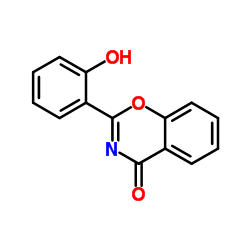
2-(2-Hydroxyphenyl)-4H-1,3-benzoxazin-4-one
- CAS No.1218-69-5
- GradeIndustrial / Pharmaceutical
- Availability● In Stock
Premium grade chemical intermediate optimized for Deferasirox synthesis. High purity assurance with comprehensive COA support for global pharmaceutical manufacturing.
Request Bulk PricingProduct Technical Details
Product Overview
2-(2-Hydroxyphenyl)-4H-1,3-benzoxazin-4-one is a highly specialized organic compound serving as a critical building block in the pharmaceutical industry. This benzoxazinone derivative is primarily utilized as a key intermediate in the synthesis of Deferasirox, an essential iron chelator used in the management of chronic iron overload. Our manufacturing process ensures exceptional chemical stability and structural integrity, making it an ideal choice for complex medicinal chemistry applications requiring precise molecular architecture.
The compound features a unique fused heterocyclic system that facilitates specific downstream reactions necessary for API production. We understand the stringent requirements of pharmaceutical synthesis, which is why our production facilities adhere to rigorous quality management systems. Each batch is synthesized under controlled conditions to minimize impurities and maximize yield, ensuring that downstream processors receive a material that meets the highest standards of consistency and reliability.
Technical Specifications
| Parameter | Value |
|---|---|
| CAS Number | 1218-69-5 |
| Molecular Formula | C14H9NO3 |
| Molecular Weight | 239.226 g/mol |
| Appearance | White to yellow crystalline powder |
| Assay (HPLC) | ≥98.0% |
| Density | 1.3±0.1 g/cm3 |
| Boiling Point | 425.0±47.0 °C at 760 mmHg |
| Flash Point | 210.8±29.3 °C |
Quality Assurance and Manufacturing
Quality is the cornerstone of our chemical supply chain. We employ advanced analytical techniques, including high-performance liquid chromatography (HPLC), to verify the purity and identity of every lot of 2-(2-Hydroxyphenyl)-4H-1,3-benzoxazin-4-one. Our quality control team conducts comprehensive testing against established specifications before any product is released for shipment. This meticulous approach guarantees that the material performs predictably in your synthesis routes, reducing the risk of batch failures or unexpected side reactions.
Our manufacturing process is designed for scalability without compromising on quality. We utilize state-of-the-art reactor systems and purification technologies to achieve industrial purity levels suitable for pharmaceutical applications. Clients receive a full Certificate of Analysis (COA) with each shipment, providing transparent data on physical properties and chemical composition. We are committed to supporting our partners with technical documentation and regulatory support files to streamline your procurement and validation processes.
Industrial Applications
The primary application of this benzoxazinone derivative is in the production of Deferasirox. Its specific structural configuration allows for efficient coupling and cyclization reactions required in the final steps of API synthesis. Beyond this primary use, the compound serves as a valuable scaffold in the development of other heterocyclic pharmaceuticals. Researchers and process chemists value this intermediate for its reactivity profile and stability under various reaction conditions.
- Optimized for large-scale API manufacturing
- Compatible with standard organic synthesis protocols
- Supports custom synthesis requirements for novel derivatives
- Ideal for research and development in medicinal chemistry
Storage and Handling
To maintain the integrity of 2-(2-Hydroxyphenyl)-4H-1,3-benzoxazin-4-one, proper storage conditions are essential. The material should be kept in a cool, ventilated area away from direct sunlight and moisture sources. Containers must be tightly sealed to prevent exposure to humidity, which could affect the physical appearance and chemical stability over time. We recommend storing the product in its original packaging until ready for use. Standard safety precautions for handling fine chemical powders should be observed, including the use of appropriate personal protective equipment to minimize inhalation or skin contact during transfer operations.