2',3'-Dideoxyuridine
- CAS No.5983-09-5
- GradeIndustrial / Pharmaceutical
- Availability● In Stock
High purity 2',3'-Dideoxyuridine (CAS 5983-09-5) for pharmaceutical research. Reliable supply for antiviral and anticancer development projects.
Request Bulk PricingProduct Technical Details
Product Overview
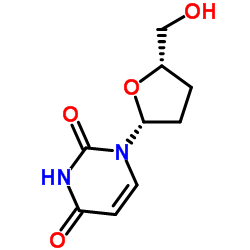
2',3'-Dideoxyuridine, frequently abbreviated as DDU, is a specialized nucleoside analogue that plays a pivotal role in modern pharmaceutical research and organic synthesis. As a critical chemical intermediate, this compound is extensively utilized in the development of novel therapeutic agents, particularly within the fields of antiviral and oncological studies. Our facility provides this high-quality reagent with a focus on consistency, purity, and regulatory compliance to support global research initiatives.
The chemical structure of 2',3'-Dideoxyuridine features a modified sugar moiety lacking hydroxyl groups at the 2' and 3' positions, which confers unique stability and reactivity profiles essential for specific biochemical pathways. This makes it an invaluable building block for medicinal chemists aiming to synthesize complex active pharmaceutical ingredients (APIs). We ensure that every batch undergoes rigorous analytical testing to meet the demanding specifications required for advanced scientific applications.
Technical Specifications
| Parameter | Specification |
|---|---|
| Chemical Name | 2',3'-Dideoxyuridine |
| CAS Number | 5983-09-5 |
| Molecular Formula | C9H12N2O4 |
| Molecular Weight | 212.20 g/mol |
| Appearance | White to pale pink powder |
| Assay (HPLC) | ≥98.0% |
| Melting Point | 127-129°C |
| Density | 1.397 g/cm3 |
| Refractive Index | 1.566 |
Industrial Applications
This compound is primarily employed as a key intermediate in the synthesis of nucleoside analogues used in pharmaceutical development. Researchers utilize 2',3'-Dideoxyuridine to explore new mechanisms of action against viral replication and cellular proliferation. Its high purity level ensures minimal interference in sensitive enzymatic assays and reaction pathways. Furthermore, it serves as a reference standard in quality control laboratories analyzing related nucleoside derivatives.
- Essential building block for antiviral drug discovery programs.
- Utilized in oncological research for developing cytotoxic agents.
- Supports structure-activity relationship (SAR) studies in medicinal chemistry.
- Compatible with various organic synthesis routes requiring high fidelity.
Quality Assurance and Storage
Quality is the cornerstone of our manufacturing process. Each production lot of 2',3'-Dideoxyuridine is accompanied by a comprehensive Certificate of Analysis (COA) detailing all critical quality attributes. Our production facilities adhere to strict operational protocols to maintain industrial purity and prevent cross-contamination. We employ advanced High-Performance Liquid Chromatography (HPLC) methods to verify assay levels and identify impurities, ensuring the material meets or exceeds the stated 98.0% purity threshold.
Proper storage is vital to maintain the integrity of this chemical. We recommend storing the product in a cool, ventilated area away from direct sunlight and moisture. The material should be kept in tightly sealed containers to prevent degradation. Our packaging solutions are designed to protect the product during international transit, ensuring it arrives in optimal condition for immediate use in your laboratory or production line.
Packaging and Logistics
We offer flexible packaging options to suit diverse customer requirements. The standard packaging configuration is 25 kg per drum, which is ideal for large-scale research and pilot production needs. However, we understand that specific projects may require different quantities. Therefore, we can customize packaging according to client specifications upon request. Our logistics team coordinates global shipping to ensure timely delivery while maintaining all necessary safety documentation for chemical transport. Partner with us for a reliable supply chain of premium chemical intermediates.