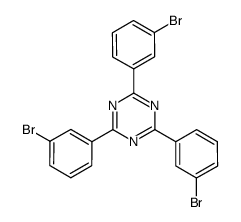
2,4,6-Tris(3-bromophenyl)-1,3,5-triazine
- CAS No.890148-78-4
- GradeIndustrial / Pharmaceutical
- Availability● In Stock
High-purity 2,4,6-Tris(3-bromophenyl)-1,3,5-triazine designed for advanced OLED material synthesis. Reliable supply with strict quality control for electronic chemical applications.
Request Bulk PricingProduct Technical Details
Product Overview
2,4,6-Tris(3-bromophenyl)-1,3,5-triazine represents a sophisticated organic building block specifically engineered for the development of high-performance organic light-emitting diode (OLED) materials. As a halogenated triazine derivative, this compound serves as a pivotal intermediate in the synthesis of complex electron-transport molecules and host materials. The structural integrity provided by the s-triazine core ensures excellent thermal stability, while the meta-substituted bromophenyl groups offer versatile reactive sites for further functionalization through palladium-catalyzed cross-coupling reactions.
Our manufacturing process focuses on delivering exceptional purity levels required by the demanding electronic chemical sector. Each batch undergoes rigorous analytical testing to ensure consistency and reliability for downstream synthesis operations. This material is essential for researchers and production facilities aiming to create next-generation display technologies with enhanced efficiency and longevity.
Key Specifications
| Parameter | Value |
|---|---|
| Chemical Name | 2,4,6-Tris(3-bromophenyl)-1,3,5-triazine |
| CAS Number | 890148-78-4 |
| Molecular Formula | C21H12Br3N3 |
| Molecular Weight | 546.05 g/mol |
| Appearance | White Powder |
| Purity (HPLC) | ≥99.0% |
Industrial Applications
This specialized intermediate is primarily utilized in the fabrication of advanced optoelectronic devices. The presence of bromine atoms facilitates Suzuki or Stille coupling reactions, allowing chemists to construct extended conjugated systems essential for efficient charge transport. Common applications include the synthesis of electron transport layers for OLED displays and the development of host materials for phosphorescent emitters. Additionally, it finds utility in the construction of organic photovoltaic components and research into new organic semiconductors.
The meta-substitution pattern on the phenyl rings provides specific steric and electronic properties that are crucial for tuning the energy levels of the final organic molecules. This precision allows manufacturers to optimize the color purity and power consumption of electronic displays.
Quality Assurance And Packaging
We understand that impurity profiles can significantly impact the performance of final electronic devices. Therefore, our quality control protocol includes comprehensive spectral analysis and chromatographic verification. The product is packaged in 25 kg drums under inert atmosphere conditions to prevent moisture absorption or degradation during transit. Custom packaging solutions are available to meet specific laboratory or production line requirements.
Storage recommendations include keeping the material in a cool, ventilated area away from direct sunlight and strong oxidizing agents. Proper handling ensures the longevity and reactivity of the bromine functional groups. We provide full documentation including Safety Data Sheets (SDS) and Certificates of Analysis (COA) with every shipment to comply with international chemical safety standards.
Why Choose Our Supply
As a dedicated manufacturer of fine chemical intermediates, we provide more than just products. Our technical team offers support regarding synthesis routes and safety data. We maintain a robust supply chain to ensure timely delivery for global clients involved in the electronic materials industry. Competitive bulk pricing and complete documentation are standard with every order. Partner with us for reliable access to critical OLED intermediates that drive innovation in the display technology sector.