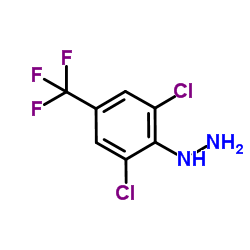
2,6-Dichloro-4-(trifluoromethyl)phenylhydrazine
- CAS No.86398-94-9
- GradeIndustrial / Pharmaceutical
- Availability● In Stock
High-purity 2,6-Dichloro-4-(trifluoromethyl)phenylhydrazine (CAS 86398-94-9) designed for agrochemical synthesis, specifically as a key intermediate for Fipronil production with ≥99.0% assay.
Request Bulk PricingProduct Technical Details
Product Overview
2,6-Dichloro-4-(trifluoromethyl)phenylhydrazine is a specialized organic intermediate critical to the modern agrochemical industry. With the CAS registry number 86398-94-9, this compound serves as a fundamental building block in the synthesis of advanced pesticide formulations. Our manufacturing process ensures exceptional consistency and purity, making it an ideal choice for large-scale industrial applications and research development projects focused on crop protection solutions.
As a leading global manufacturer, we understand the stringent requirements of the chemical supply chain. This phenylhydrazine derivative is produced under strict quality control protocols to meet international standards. The presence of chloro and trifluoromethyl groups enhances its reactivity and stability, facilitating efficient downstream synthesis processes for complex agricultural active ingredients.
Technical Specifications
We maintain rigorous testing procedures to guarantee the reliability of every batch. The following table outlines the key physical and chemical properties verified during our quality assurance process.
| Parameter | Value |
|---|---|
| Molecular Formula | C7H5Cl2F3N2 |
| Molecular Weight | 245.029 g/mol |
| CAS Number | 86398-94-9 |
| Purity (Assay) | ≥99.0% |
| Appearance | Colorless solid |
| Melting Point | 58-60 °C |
| Boiling Point | 223.9±40.0 °C at 760 mmHg |
| Density | 1.6±0.1 g/cm3 |
| Loss on Drying | ≤2.0% |
| Heavy Metals | ≤10 ppm |
| Water Content | ≤1.0% |
| Total Impurity | ≤0.5% |
Industrial Applications
The primary application of this compound is as a key intermediate in the production of Fipronil, a widely used broad-spectrum insecticide. Its chemical structure allows for precise coupling reactions necessary for creating effective pest control agents. Beyond this specific use, it serves as a valuable synthon in the development of new agrochemical entities where halogenated phenylhydrazine structures are required.
Research laboratories and production facilities utilize this material for process optimization and scale-up studies. The high industrial purity ensures minimal side reactions, leading to better yields and reduced waste in the final manufacturing process. We support clients with technical data packages to facilitate seamless integration into their existing synthesis routes.
Quality Assurance and Safety
Our commitment to quality extends beyond the final product. We implement comprehensive safety measures throughout the production lifecycle. Each shipment is accompanied by a Certificate of Analysis (COA) detailing batch-specific test results. We adhere to global regulatory guidelines for the handling and transport of chemical intermediates.
- Consistent batch-to-batch reproducibility
- Advanced analytical verification using HPLC and GC-MS
- Secure packaging to prevent moisture absorption
- Comprehensive documentation for regulatory compliance
Storage and Handling
To maintain optimal stability, 2,6-Dichloro-4-(trifluoromethyl)phenylhydrazine should be stored in a cool, dry, and well-ventilated area. Containers must remain tightly closed when not in use to protect against environmental contaminants. Standard industrial safety protocols for handling organic solids should be followed, including the use of appropriate personal protective equipment. We offer flexible packaging options, including 25kg drums, customized to meet specific logistical requirements.