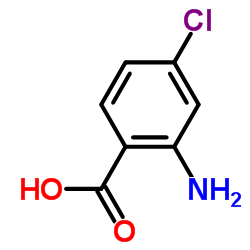
2-Amino-4-chlorobenzoic acid
- CAS No.89-77-0
- GradeIndustrial / Pharmaceutical
- Availability● In Stock
High-purity pharmaceutical intermediate essential for kinase inhibitor synthesis and advanced organic chemistry applications.
Request Bulk PricingProduct Technical Details
Product Overview
2-Amino-4-chlorobenzoic acid, also known commercially as 4-chloroanthranilic acid, is a critical building block in the field of fine chemical synthesis. This compound features a benzoic acid backbone substituted with both amino and chloro functional groups, making it highly versatile for nucleophilic substitution and coupling reactions. Our manufacturing process ensures exceptional batch-to-batch consistency, catering to the rigorous demands of pharmaceutical and agrochemical research sectors.
As a key intermediate, this chemical plays a pivotal role in the construction of complex heterocyclic structures. The presence of the chloro group at the para position relative to the carboxyl group allows for specific functionalization pathways, while the ortho-amino group facilitates cyclization reactions. This dual reactivity profile makes it an indispensable resource for developing advanced therapeutic agents, including tyrosine kinase inhibitors used in oncology treatments.
Technical Specifications
We adhere to strict quality control protocols to guarantee that every shipment meets or exceeds industry standards. The following table outlines the key physical and chemical parameters for our standard grade material.
| Parameter | Specification |
|---|---|
| CAS Number | 89-77-0 |
| Molecular Formula | C7H6ClNO2 |
| Molecular Weight | 171.58 g/mol |
| Appearance | Off-white to beige solid |
| Purity (HPLC) | ≥99.0% |
| Melting Point | 231-233 °C |
| Loss on Drying | ≤0.5% |
| Boiling Point | 330 °C |
Industrial Applications
The primary application of 2-Amino-4-chlorobenzoic acid lies in the synthesis of active pharmaceutical ingredients (APIs). It serves as a foundational precursor for various quinazoline and indole derivatives. In the pharmaceutical industry, it is specifically utilized in the manufacturing pathways of targeted cancer therapies. Beyond human health, this compound finds utility in the agrochemical sector as an intermediate for specialized pesticides and herbicides, contributing to crop protection solutions.
Researchers value this material for its stability and reactivity balance. It is compatible with various synthetic routes, including amide formation, esterification, and metal-catalyzed cross-coupling reactions. Our technical team supports clients in optimizing these synthesis routes for scale-up production.
Quality Assurance and Handling
Quality is the cornerstone of our operation. Each batch undergoes comprehensive analysis using high-performance liquid chromatography (HPLC) and nuclear magnetic resonance (NMR) spectroscopy. A Certificate of Analysis (COA) is provided with every order to verify compliance with the specified purity levels. We maintain ISO-compliant manufacturing facilities to ensure safety and environmental responsibility.
For optimal preservation, the product should be stored in a cool, dry, and well-ventilated area. Containers must remain tightly closed to prevent moisture absorption, which could affect flowability and reaction efficiency. We offer flexible packaging options, typically supplying in 25kg cardboard drums, but can accommodate custom requirements based on logistical needs. Our global supply chain ensures timely delivery to laboratories and production facilities worldwide.