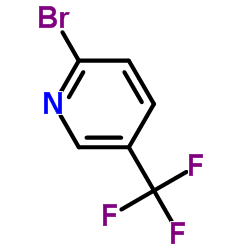
2-Bromo-5-(trifluoromethyl)pyridine
- CAS No.50488-42-1
- GradeIndustrial / Pharmaceutical
- Availability● In Stock
Premium grade 2-Bromo-5-(trifluoromethyl)pyridine (CAS 50488-42-1) designed for complex organic synthesis. High purity assured for pharmaceutical and agrochemical research.
Request Bulk PricingProduct Technical Details
Product Overview
2-Bromo-5-(trifluoromethyl)pyridine represents a critical heterocyclic building block extensively utilized in modern organic synthesis and pharmaceutical development. This halogenated pyridine derivative combines the electronic influence of a trifluoromethyl group with the reactive versatility of a bromine substituent, making it an indispensable precursor for complex molecular architectures. Our manufacturing process ensures high chemical purity and consistency, catering to the rigorous demands of medicinal chemistry and agrochemical research laboratories worldwide. The strategic placement of the bromine atom at the second position and the trifluoromethyl group at the fifth position of the pyridine ring facilitates diverse transformation pathways.
Chemists leverage this compound for cross-coupling reactions, nucleophilic substitutions, and lithiation processes. The presence of the trifluoromethyl moiety is particularly valued for enhancing the metabolic stability and lipophilicity of final drug candidates, aligning with contemporary trends in drug design. As a stable solid at room temperature, it offers convenient handling and storage characteristics compared to liquid analogues, reducing logistical complexities for international buyers seeking reliable raw materials for scale-up projects.
Key Specifications
| Parameter | Value |
|---|---|
| Chemical Name | 2-Bromo-5-(trifluoromethyl)pyridine |
| CAS Number | 50488-42-1 |
| Molecular Formula | C6H3BrF3N |
| Molecular Weight | 225.994 g/mol |
| Appearance | Off-white Powder |
| Assay (Purity) | ≥99.0% |
| Moisture Content | ≤0.5% |
| Boiling Point | 209.3±35.0 °C |
| Melting Point | 44-48 °C |
| Density | 1.7±0.1 g/cm3 |
Industrial Applications
This specialized chemical intermediate serves as a foundational element in the synthesis of advanced pharmaceuticals and agricultural chemicals. Its primary utility lies in the construction of biologically active molecules where pyridine scaffolds are required. The compound is frequently employed in palladium-catalyzed coupling reactions, such as Suzuki-Miyaura and Buchwald-Hartwig aminations, enabling the efficient formation of carbon-carbon and carbon-heteroatom bonds. Researchers value this reagent for its predictable reactivity profile and minimal side product formation during critical synthesis steps.
- Pharmaceutical Intermediates: Used in the development of kinase inhibitors and receptor modulators.
- Agrochemical Synthesis: Essential for creating novel herbicides and pesticides with improved environmental profiles.
- Material Science: Applied in the production of organic electronic materials and functional polymers.
- Research and Development: A standard reagent for academic and industrial organic chemistry laboratories.
Quality Assurance and Storage
We adhere to strict quality control protocols to guarantee the integrity of every batch. Each production lot undergoes comprehensive analysis using advanced spectroscopic and chromatographic methods to verify identity and purity. A Certificate of Analysis (COA) is provided with every shipment, ensuring transparency and compliance with international standards. Our facility maintains ISO-certified processes to minimize impurities and ensure batch-to-batch reproducibility, which is vital for clients navigating regulatory submissions.
For optimal stability, the product should be stored in a cool, ventilated environment away from direct sunlight and moisture. Proper sealing is recommended to prevent degradation or hydrolysis over extended periods. We offer flexible packaging options, including standard 25 kg drums, with customization available to meet specific logistical requirements. Our global supply chain ensures timely delivery while maintaining the highest safety standards during transportation. Handling should follow standard laboratory safety procedures, including the use of appropriate personal protective equipment to avoid inhalation or skin contact.