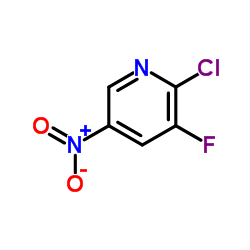
2-Chloro-3-fluoro-5-nitropyridine
- CAS No.1079179-12-6
- GradeIndustrial / Pharmaceutical
- Availability● In Stock
High-purity 2-Chloro-3-fluoro-5-nitropyridine (CAS 1079179-12-6), a key fluorinated heterocyclic intermediate for advanced pharmaceutical synthesis.
Request Bulk PricingProduct Technical Details
Product Overview
2-Chloro-3-fluoro-5-nitropyridine is a high-value fluorinated heterocyclic compound widely employed as a critical building block in the development of complex pharmaceutical active ingredients. With its unique combination of chlorine, fluorine, and nitro functional groups on the pyridine ring, this molecule offers versatile reactivity for selective cross-coupling, nucleophilic substitution, and reduction reactions—making it indispensable in modern medicinal chemistry workflows.
Specifications
| Molecular Formula | C5H2ClFN2O2 |
|---|---|
| Molecular Weight | 176.53 g/mol |
| Appearance | White Crystalline Powder |
| Purity | ≥99.0% |
| Density | 1.6 ± 0.1 g/cm³ |
| Boiling Point | 247.0 ± 35.0 °C at 760 mmHg |
| Flash Point | 103.2 ± 25.9 °C |
| Refractive Index | 1.560 |
| Packaging | 25 kg per drum |
| Storage | Store in a tightly closed container in a cool, dry place |
Industrial Applications
This compound serves primarily as a specialty intermediate in the synthesis of next-generation therapeutic agents. Its strategic placement of electron-withdrawing substituents enables precise molecular engineering for drug candidates targeting oncology, central nervous system disorders, and anti-infective therapies. Due to its high regioselectivity and compatibility with palladium-catalyzed transformations, 2-Chloro-3-fluoro-5-nitropyridine is frequently utilized in late-stage functionalization protocols within GMP-compliant API manufacturing pipelines.
- Ideal for constructing fluorinated pyridine cores in drug discovery
- Enables efficient diversification via Suzuki, Buchwald-Hartwig, and SNAr reactions
- Supplied with full analytical documentation including COA and NMR spectra
- Manufactured under ISO-certified quality systems for batch-to-batch consistency