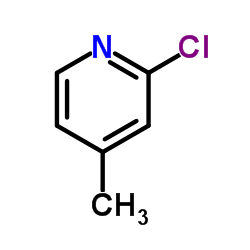
2-Chloro-4-picoline
- CAS No.3678-62-4
- GradeIndustrial / Pharmaceutical
- Availability● In Stock
High-purity 2-Chloro-4-picoline (CAS 3678-62-4), a key pyridine-based intermediate for advanced organic synthesis in pharmaceutical and agrochemical manufacturing.
Request Bulk PricingProduct Technical Details
Product Overview
2-Chloro-4-picoline, chemically designated as 2-chloro-4-methylpyridine, is a vital heterocyclic building block widely employed in the synthesis of complex active pharmaceutical ingredients (APIs) and specialty agrochemicals. With the molecular formula C6H6ClN and a molecular weight of 127.572 g/mol, this compound features a chlorinated pyridine core substituted with a methyl group at the 4-position, offering versatile reactivity for nucleophilic substitution and cross-coupling reactions.
Specifications
| Molecular Formula | C6H6ClN |
|---|---|
| Molecular Weight | 127.572 g/mol |
| Density | 1.2 ± 0.1 g/cm³ |
| Boiling Point | 195.3 ± 20.0 °C at 760 mmHg |
| Flash Point | 89.6 ± 7.4 °C |
| Appearance | Colorless liquid |
| Assay | ≥98.0% |
Industrial Applications
As a high-value intermediate in fine chemical manufacturing, 2-Chloro-4-picoline serves as a critical precursor in multi-step synthetic routes targeting neurological therapeutics, crop protection agents, and functional materials. Its structural motif enables efficient derivatization to introduce pharmacophores or modulate physicochemical properties in drug discovery pipelines.
- Used in the preparation of substituted pyridines via palladium-catalyzed coupling reactions
- Serves as a scaffold for synthesizing kinase inhibitors and other targeted therapeutics
- Applicable in the development of novel herbicides and insecticides
Stored in a cool, well-ventilated area away from ignition sources, this product is typically supplied in 200 kg drums or customized packaging to meet global regulatory and logistical requirements. Our stringent quality control ensures batch-to-batch consistency and compliance with international standards for industrial intermediates.