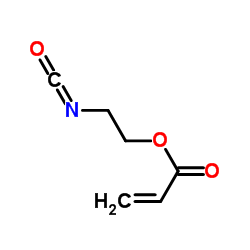
2-Isocyanatoethylacrylate
- CAS No.13641-96-8
- GradeIndustrial / Pharmaceutical
- Availability● In Stock
High-purity 2-Isocyanatoethylacrylate (CAS 13641-96-8) designed for advanced polymer synthesis and coating formulations.
Request Bulk PricingProduct Technical Details
Product Overview
2-Isocyanatoethylacrylate represents a critical bifunctional monomer utilized extensively in the field of advanced organic synthesis and polymer chemistry. This compound features both an isocyanate group and an acrylate group within its molecular structure, enabling unique reactivity profiles that are essential for creating specialized coatings, adhesives, and modified resins. Our manufacturing facility ensures that every batch meets stringent quality control standards, providing consistency for industrial-scale applications.
As a leading global manufacturer, we understand the importance of chemical purity in downstream processing. The production of 2-Isocyanatoethylacrylate involves precise catalytic processes to minimize impurities and maximize yield. This commitment to quality ensures that our clients receive a product that performs reliably in sensitive chemical reactions, reducing waste and improving overall process efficiency.
Key Specifications
Quality assurance is paramount in the supply of reactive intermediates. We employ advanced analytical techniques, including gas chromatography and spectroscopy, to verify the composition of each lot. The following table outlines the standard technical specifications for our premium grade material:
| Parameter | Specification |
|---|---|
| CAS Number | 13641-96-8 |
| Molecular Formula | C6H7NO3 |
| Molecular Weight | 141.125 g/mol |
| Appearance | Colorless to pale yellow transparent liquid |
| Assay (Purity) | ≥99.0% |
| Density | 1.1±0.1 g/cm3 |
| Boiling Point | 200.0±23.0 °C at 760 mmHg |
| Flash Point | 86.0±17.1 °C |
Industrial Applications
The versatility of 2-Isocyanatoethylacrylate makes it a valuable component in various industrial sectors. It is primarily used as a reactive diluent or cross-linking agent in UV-curable coatings and inks. The acrylate functionality allows for rapid polymerization under UV light, while the isocyanate group can react with hydroxyl or amine groups to form urethane or urea linkages, enhancing the mechanical properties of the final polymer matrix.
Additionally, this intermediate is employed in the synthesis of specialty adhesives where high bond strength and chemical resistance are required. In the realm of resin modification, it serves as a grafting agent to introduce specific functional groups onto polymer backbones, thereby tailoring surface properties such as adhesion, wettability, and compatibility with other materials. Research and development teams also utilize this chemical for creating novel biomaterials and hydrogels with controlled degradation rates.
Storage and Handling
Proper storage is essential to maintain the stability and reactivity of 2-Isocyanatoethylacrylate. The product should be stored in a cool, ventilated place away from direct sunlight and sources of ignition. Containers must be kept tightly sealed to prevent moisture ingress, as isocyanates are sensitive to water and can degrade upon exposure. We recommend using appropriate personal protective equipment (PPE), including chemical-resistant gloves and eye protection, during handling operations.
Our packaging options include 200 kg drums, with custom packaging available upon request to suit specific logistical requirements. We provide comprehensive documentation, including Certificates of Analysis (COA) and Safety Data Sheets (SDS), with every shipment to ensure compliance with international transport regulations. For bulk orders, our logistics team coordinates global shipping to ensure timely delivery to your manufacturing facility.