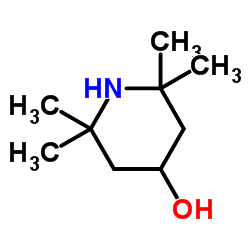
2,2,6,6-Tetramethylpiperidin-4-ol
- CAS No.2403-88-5
- GradeIndustrial / Pharmaceutical
- Availability● In Stock
High-purity 2,2,6,6-tetramethylpiperidin-4-ol (CAS 2403-88-5), a key intermediate for hindered amine light stabilizers used in polymer and coating industries.
Request Bulk PricingProduct Technical Details
Product Overview
2,2,6,6-Tetramethylpiperidin-4-ol is a high-value piperidine derivative widely employed as a critical chemical intermediate in the production of hindered amine light stabilizers (HALS). With its robust molecular structure featuring four methyl groups adjacent to the nitrogen atom and a hydroxyl functionality at the 4-position, it offers exceptional stability and reactivity control during downstream synthesis. This compound is essential for enhancing the photostability of polymers, coatings, and elastomers exposed to UV radiation.
Specifications
| Molecular Formula | C9H19NO |
|---|---|
| Molecular Weight | 157.25 g/mol |
| Appearance | White to slightly beige crystalline powder |
| Melting Point | 129–131 °C (lit.) |
| Boiling Point | 212–215 °C (lit.) |
| Density | 0.891 g/cm³ |
| Water Solubility | 130 g/L at 23 °C |
| Vapor Pressure | 0.035 mmHg at 25 °C |
| Assay (Purity) | ≥99.0% (Typical: 99.7%) |
| Moisture Content | ≤0.10% (Typical: 0.08%) |
| Ash Content | ≤0.10% (Typical: 0.01%) |
| Color (Hazen) | ≤20 Hazen (Typical: 4) |
Industrial Applications
This compound serves primarily as a building block in the synthesis of advanced hindered amine light stabilizers such as Tinuvin® 770 and Chimassorb® 944 analogs. Its role is pivotal in formulating long-lasting UV protection systems for polyolefins, polyurethanes, paints, adhesives, and agricultural films. Due to its high purity and consistent quality, it ensures optimal performance and compatibility in complex polymer matrices.
- Key precursor for HALS manufacturing
- Enhances weatherability and lifespan of plastic products
- Compatible with a wide range of thermoplastic and thermoset systems
- Stable under standard storage and handling conditions
Store in a tightly closed container in a cool, dry, and well-ventilated area away from oxidizing agents and strong acids. Proper handling ensures extended shelf life and maintains product integrity for industrial-scale applications.