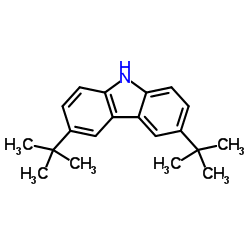
3,6-Di-tert-butylcarbazole
- CAS No.37500-95-1
- GradeIndustrial / Pharmaceutical
- Availability● In Stock
High-purity 3,6-Di-tert-butylcarbazole (CAS 37500-95-1) designed for advanced OLED material synthesis. Available in bulk with comprehensive COA.
Request Bulk PricingProduct Technical Details
Product Overview
3,6-Di-tert-butylcarbazole is a highly specialized organic compound that serves as a fundamental building block in the synthesis of advanced electronic materials. As a substituted carbazole derivative, this chemical exhibits exceptional thermal stability and favorable electronic properties, making it indispensable for the development of next-generation organic light-emitting diodes (OLEDs). Our production process ensures that every batch meets rigorous international standards for purity and consistency, supporting the demanding requirements of the organic semiconductor industry.
The molecular structure features tert-butyl groups at the 3 and 6 positions, which significantly enhance the solubility and processability of downstream derivatives. This structural modification is crucial for improving the morphological stability of thin films used in display technologies and lighting applications. By utilizing high-grade raw materials and advanced catalytic systems, we deliver a product that facilitates efficient charge transport and luminescence in final devices.
Key Chemical Properties
Understanding the physicochemical characteristics of 3,6-Di-tert-butylcarbazole is essential for process optimization in research and manufacturing environments. The compound presents as a white crystalline powder, indicating a high degree of crystallinity and structural order. With a melting point of approximately 232 degrees Celsius, it demonstrates robust thermal resistance, which is vital during high-temperature processing steps such as vacuum deposition or solution processing.
- High thermal stability suitable for vapor deposition processes.
- Enhanced solubility in common organic solvents due to steric hindrance.
- Excellent electrochemical properties for hole-transport applications.
- Low impurity profile to prevent quenching effects in OLED devices.
Industrial Applications
This intermediate is primarily utilized in the fabrication of organic electroluminescent materials. It acts as a core scaffold for constructing complex host materials and emissive dopants. Researchers and engineers in the field of organic photovoltaics and flat-panel displays rely on this compound to achieve high efficiency and long operational lifetimes in their products. The versatility of the carbazole nucleus allows for further functionalization, enabling the design of customized materials with specific energy levels.
Beyond OLEDs, this chemical finds utility in the development of organic field-effect transistors (OFETs) and sensors. Its ability to form stable radical cations makes it a candidate for various electronic applications where charge mobility is paramount. Our supply chain is optimized to support both pilot-scale research and large-scale commercial production needs.
Quality Assurance and Specifications
Quality control is the cornerstone of our manufacturing philosophy. Each production lot undergoes comprehensive analysis using high-performance liquid chromatography (HPLC) and nuclear magnetic resonance (NMR) spectroscopy to verify identity and purity. We maintain a strict assay standard of greater than 99.0 percent to ensure minimal interference in sensitive electronic applications. Documentation including Certificates of Analysis (COA) and Material Safety Data Sheets (MSDS) is provided with every shipment.
| Parameter | Value |
|---|---|
| CAS Number | 37500-95-1 |
| Molecular Formula | C20H25N |
| Molecular Weight | 279.42 g/mol |
| Appearance | White crystalline powder |
| Assay | ≥99.0% |
| Melting Point | 232ºC |
Packaging is designed to maintain product integrity during transit. Standard options include 25 kg drums, with flexibility for custom packaging solutions based on client requirements. Storage recommendations emphasize keeping the material in a cool, ventilated environment away from direct sunlight and moisture to preserve its chemical stability over extended periods.