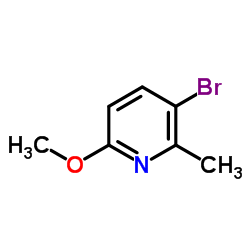
3-Bromo-6-methoxy-2-methylpyridine
- CAS No.126717-59-7
- GradeIndustrial / Pharmaceutical
- Availability● In Stock
High-purity 3-Bromo-6-methoxy-2-methylpyridine (CAS 126717-59-7) is a premium pyridine intermediate designed for complex organic synthesis and pharmaceutical manufacturing processes.
Request Bulk PricingProduct Technical Details
Product Overview
3-Bromo-6-methoxy-2-methylpyridine represents a critical building block in the realm of advanced organic synthesis and medicinal chemistry. As a specialized pyridine derivative, this compound features a unique substitution pattern comprising bromo, methoxy, and methyl functional groups attached to the pyridine ring. This specific structural configuration imparts distinct reactivity profiles, making it an invaluable precursor for the construction of complex heterocyclic systems found in modern pharmaceutical agents and agrochemical formulations.
Our manufacturing facility ensures that every batch of 3-Bromo-6-methoxy-2-methylpyridine meets stringent quality benchmarks. Produced under controlled conditions, this intermediate is optimized for researchers and industrial chemists who require consistent performance in cross-coupling reactions, nucleophilic substitutions, and other transformative synthetic pathways. The high level of purity guarantees minimal side reactions, thereby enhancing overall yield and efficiency in downstream production.
Technical Specifications
To support rigorous quality control protocols in your laboratory or production plant, we provide comprehensive analytical data for every shipment. The following table outlines the key physical and chemical properties verified through standard testing methods including Gas Chromatography (GC) and refractive index analysis.
| Parameter | Specification |
|---|---|
| Chemical Name | 3-Bromo-6-methoxy-2-methylpyridine |
| CAS Registry Number | 126717-59-7 |
| Molecular Formula | C7H8BrNO |
| Molecular Weight | 202.05 g/mol |
| Appearance | Colorless clear liquid |
| Purity (GC) | ≥99.0% |
| Density | 1.452 g/cm3 |
| Boiling Point | 212.6 °C |
| Flash Point | 82.4 °C |
| Refractive Index | 1.538 |
Industrial Applications
The primary utility of 3-Bromo-6-methoxy-2-methylpyridine lies in its role as a versatile intermediate for organic synthesis. Pharmaceutical companies utilize this compound extensively in the development of new drug candidates, particularly those targeting neurological or inflammatory pathways where substituted pyridine scaffolds are prevalent. The bromine atom serves as an excellent leaving group for palladium-catalyzed coupling reactions, such as Suzuki-Miyaura or Buchwald-Hartwig aminations, facilitating the rapid assembly of diverse molecular libraries.
Beyond pharmaceuticals, this chemical finds application in the agrochemical sector for the synthesis of novel pesticides and herbicides. Its stability and reactivity balance allow chemists to introduce specific functional groups with high precision. Whether used in small-scale discovery research or large-scale commercial manufacturing, this intermediate provides a reliable foundation for creating high-value chemical entities.
Quality Assurance and Packaging
We understand that supply chain reliability is as crucial as product quality. Our commitment to excellence extends from synthesis to delivery. Each drum is sealed to prevent moisture ingress and contamination, preserving the integrity of the colorless clear liquid during transit. We offer flexible packaging solutions, including standard 200 kg drums, with customization available to meet specific logistical requirements.
Every order is accompanied by a comprehensive Certificate of Analysis (COA) detailing batch-specific test results. Our quality assurance team conducts multi-point inspections to ensure compliance with international standards. For global clients, we manage complex logistics to ensure timely delivery while maintaining all necessary safety documentation for hazardous materials transport.
Storage and Handling
To maintain optimal stability, 3-Bromo-6-methoxy-2-methylpyridine should be stored in a cool, ventilated area away from direct sunlight and heat sources. The container must remain tightly closed when not in use to prevent oxidation or hydrolysis. Personnel handling this material should adhere to standard laboratory safety practices, including the use of appropriate personal protective equipment (PPE) such as gloves and safety goggles. In case of spillage, absorb with inert material and dispose of according to local environmental regulations.