3-Bromophenylboronic acid
- CAS No.89598-96-9
- GradeIndustrial / Pharmaceutical
- Availability● In Stock
High-purity 3-Bromophenylboronic acid for Suzuki coupling. Ideal for pharmaceutical and OLED synthesis with global supply.
Request Bulk PricingProduct Technical Details
Product Overview
3-Bromophenylboronic acid is a highly versatile organoboron compound widely recognized for its critical role in modern organic synthesis. As a key building block, this chemical facilitates efficient carbon-carbon bond formation, particularly through palladium-catalyzed cross-coupling reactions. Our manufacturing process ensures exceptional consistency and reliability, making it an ideal choice for complex molecular construction in research and industrial settings.
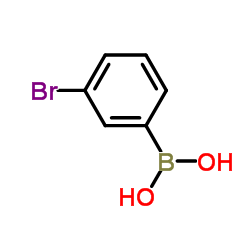
This compound features a bromine substituent at the meta position of the phenyl ring, which enhances its reactivity profile while maintaining stability under standard storage conditions. The precise molecular structure allows chemists to introduce functional groups with high selectivity, streamlining the development of novel pharmaceutical candidates and advanced electronic materials. We prioritize quality to support your synthesis goals.
Technical Specifications
| Parameter | Value |
|---|---|
| Product Name | 3-Bromophenylboronic acid |
| CAS Number | 89598-96-9 |
| Molecular Formula | C6H6BBrO2 |
| Molecular Weight | 200.83 g/mol |
| Appearance | Grayish white crystal |
| Assay | ≥98.0% |
| Water Content | ≤0.50% |
| Melting Point | 164-168 °C |
| Density | 1.67 g/cm3 |
Industrial Applications
The primary utility of 3-Bromophenylboronic acid lies in its application as a pharmaceutical intermediate. It serves as an essential precursor in the synthesis of biologically active molecules, including kinase inhibitors and receptor modulators. The robustness of the boronic acid moiety enables successful Suzuki-Miyaura coupling, allowing for the modular assembly of diverse chemical architectures required in drug discovery.
Beyond the life sciences sector, this material is increasingly utilized in the production of OLED intermediates. Its electronic properties contribute to the development of efficient emissive layers and charge transport materials in next-generation display technologies. Researchers also leverage this compound in agrochemical development and fine chemical synthesis where specific meta-substitution patterns are required for optimal performance.
- Pharmaceutical API synthesis
- Organic light-emitting diode (OLED) materials
- Agrochemical intermediate production
- Advanced polymer modification
Quality Assurance and Logistics
We adhere to strict quality control protocols to guarantee that every batch meets or exceeds the specified purity levels. Each shipment is accompanied by a comprehensive Certificate of Analysis (COA), ensuring transparency and compliance with international standards. Our facility employs advanced analytical techniques, including HPLC and NMR, to verify structural integrity and impurity profiles before release.
Packaging is designed to maintain product integrity during transit. Standard options include 25kg drums, with customization available to meet specific client requirements. We recommend storing the material in a cool, dry, and well-ventilated area with containers tightly closed to prevent moisture absorption. As a non-dangerous good, transportation is streamlined, reducing logistical complexities for global partners seeking reliable supply chains.