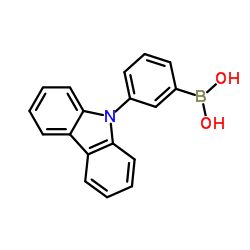
(3-(9H-Carbazol-9-yl)phenyl)boronic acid
- CAS No.864377-33-3
- GradeIndustrial / Pharmaceutical
- Availability● In Stock
High-purity (3-(9H-Carbazol-9-yl)phenyl)boronic acid designed for advanced OLED material synthesis. Reliable supply with strict quality control.
Request Bulk PricingProduct Technical Details
Product Overview
(3-(9H-Carbazol-9-yl)phenyl)boronic acid represents a critical building block in the synthesis of advanced organic light-emitting diode (OLED) materials. As a specialized organic intermediate, this compound facilitates the construction of complex conjugated systems essential for high-performance electronic applications. Our manufacturing process ensures exceptional purity levels, making it an ideal candidate for researchers and industrial producers focused on next-generation display technologies and lighting solutions.
The carbazole moiety is renowned for its excellent charge-transporting properties and thermal stability. When combined with the reactive boronic acid functional group, this molecule becomes a versatile precursor for palladium-catalyzed cross-coupling reactions. This capability allows chemists to efficiently extend pi-conjugated systems, thereby tuning the electronic and optical properties of the final OLED emissive layers. We prioritize consistency and reliability in every batch produced.
Key Chemical Characteristics
Understanding the physicochemical properties of this intermediate is vital for process optimization and safety. The compound exhibits robust thermal stability, which is crucial during various synthesis steps involving elevated temperatures. The high assay value guarantees minimal impurity interference during sensitive coupling reactions, reducing the need for extensive downstream purification and saving valuable production time.
- High thermal stability suitable for rigorous reaction conditions.
- Excellent solubility profile in common organic solvents used in synthesis.
- Consistent batch-to-batch reproducibility for industrial scaling.
- Optimized for Suzuki-Miyaura cross-coupling efficiency.
- Low metal content suitable for electronic grade applications.
Technical Specifications
We adhere to strict quality control protocols to ensure every drum meets the specified standards. The following table outlines the key parameters verified during our quality assurance process. Each certificate of analysis is thoroughly reviewed before shipment to guarantee compliance with international standards.
| Parameter | Value |
|---|---|
| CAS Number | 864377-33-3 |
| Molecular Formula | C18H14BNO2 |
| Molecular Weight | 287.12 |
| Appearance | White to off-white crystalline powder |
| Assay (HPLC) | ≥99.0% |
| Boiling Point | 472.6ºC |
| Flash Point | 239.6ºC |
| Density | 1.2 g/cm3 |
Industrial Applications and Usage
Primarily utilized in the fabrication of OLED intermediates, this boronic acid derivative serves as a foundational element for creating host materials and charge transport layers. The high purity specification is particularly important for electronic grade chemicals, where trace metal contaminants or organic impurities can significantly degrade device performance and lifespan. Our clients rely on this material for producing high-efficiency phosphorescent and fluorescent emitters.
Our supply chain is designed to support both laboratory-scale research and large-scale commercial production. We offer flexible packaging options to accommodate diverse project requirements, ensuring that material integrity is maintained from our facility to your production line. Whether you are developing new prototypes or scaling up existing formulations, our product provides the reliability needed for success.
Storage and Handling
To maintain the stability and reactivity of (3-(9H-Carbazol-9-yl)phenyl)boronic acid, proper storage conditions are essential. The product should be kept in a cool, ventilated environment away from direct sunlight and moisture. Boronic acids can be sensitive to hydration or oxidation over extended periods, so sealing containers tightly after use is recommended to prevent degradation.
For further technical data, including detailed safety data sheets (SDS) and certificates of analysis (COA), please contact our technical support team. We are committed to providing comprehensive documentation to support your regulatory compliance and quality assurance needs. Our experts are available to discuss specific application requirements and provide guidance on optimal usage conditions for your specific synthesis pathways.