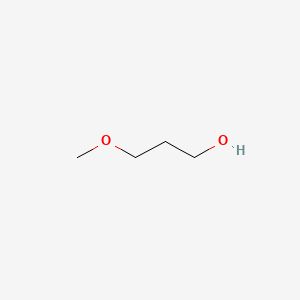
3-Methoxy-1-propanol
- CAS No.1589-49-7
- GradeIndustrial / Pharmaceutical
- Availability● In Stock
High-purity 3-Methoxy-1-propanol (CAS 1589-49-7), a key intermediate in pharmaceutical synthesis, particularly for rabeprazole production.
Request Bulk PricingProduct Technical Details
Product Overview
3-Methoxy-1-propanol (CAS 1589-49-7) is a high-purity specialty alcohol widely utilized as a chemical intermediate in the pharmaceutical and fine chemical industries. With its well-defined reactivity and solubility profile, it serves as a critical building block in the synthesis of proton pump inhibitors, notably rabeprazole. This compound is manufactured under stringent quality control protocols to ensure batch-to-batch consistency and compliance with international regulatory standards.
Specifications
| Molecular Formula | C4H10O2 |
|---|---|
| Molecular Weight | 90.121 g/mol |
| Appearance | Colorless to light yellow clear liquid |
| Purity (GC) | ≥99.0% |
| Moisture (K.F.) | ≤0.50% |
| Density | 0.9 ± 0.1 g/cm³ |
| Boiling Point | 158.1 ± 8.0 °C at 760 mmHg |
| Flash Point | 52.8 ± 6.3 °C |
| Refractive Index | 1.400 |
Industrial Applications
As a versatile glycol ether derivative, 3-Methoxy-1-propanol is primarily employed in advanced organic synthesis pathways. Its main application lies in the production of rabeprazole intermediates, where it contributes to the construction of the methoxypropyl side chain essential for biological activity. Beyond pharmaceuticals, it may also function as a solvent or coupling agent in agrochemical and electronic chemical formulations due to its moderate polarity and low volatility.
- High chemical stability under standard processing conditions
- Excellent solubility in water and common organic solvents
- Compatible with large-scale continuous manufacturing processes
- Supplied with full documentation including Certificate of Analysis (COA)
Storage recommendations include keeping the material in a cool, well-ventilated area away from ignition sources, in tightly sealed containers to prevent moisture uptake. Packaging is typically provided in 50-liter drums, with custom options available upon request to meet specific logistical or regulatory requirements.