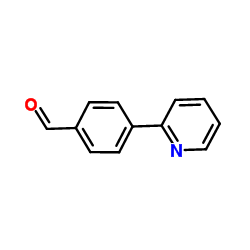
4-(2-Pyridinyl)benzaldehyde
- CAS No.127406-56-8
- GradeIndustrial / Pharmaceutical
- Availability● In Stock
High-purity 4-(2-Pyridinyl)benzaldehyde serves as a critical pharmaceutical intermediate for API synthesis, ensuring reliable quality and consistent supply for global manufacturers.
Request Bulk PricingProduct Technical Details
Product Overview
4-(2-Pyridinyl)benzaldehyde is a sophisticated heterocyclic organic compound that plays a pivotal role in modern medicinal chemistry and pharmaceutical manufacturing. Characterized by its unique structure combining a pyridine ring with a benzaldehyde moiety, this chemical building block offers exceptional reactivity for various synthetic transformations. Our facility specializes in the production of this high-value intermediate, adhering to strict quality control standards to meet the demanding requirements of the global pharmaceutical industry.
As a key precursor in the synthesis of complex active pharmaceutical ingredients (APIs), this compound is valued for its stability and versatility. The presence of the aldehyde functional group allows for diverse chemical modifications, including condensation reactions, oxidations, and reductions, making it an indispensable tool for research and development teams focused on novel therapeutic agents.
Technical Specifications
We maintain rigorous testing protocols to ensure every batch meets or exceeds industry standards for purity and physical properties. The following table outlines the critical specifications for our commercial grade material:
| Parameter | Specification |
|---|---|
| CAS Number | 127406-56-8 |
| Molecular Formula | C12H9NO |
| Molecular Weight | 183.21 g/mol |
| Appearance | White crystalline powder |
| Purity (HPLC) | ≥98.0% |
| Water Content | ≤0.5% |
| Melting Point | 50-52 °C |
| Boiling Point | 340.4 °C at 760 mmHg |
| Density | 1.147 g/cm3 |
Physical and Chemical Properties
This compound exhibits distinct physical characteristics that facilitate its handling and processing in industrial settings. With a melting point range of 50 to 52 degrees Celsius, it remains stable under standard storage conditions. The high boiling point indicates thermal stability, which is crucial during various synthesis steps involving elevated temperatures. The refractive index and density values are consistent with high-grade heterocyclic aldehydes, ensuring compatibility with standard solvent systems used in organic synthesis.
Industrial Applications
The primary application of 4-(2-Pyridinyl)benzaldehyde lies in the pharmaceutical sector, where it serves as a vital intermediate for the production of specific antiretroviral agents. It is notably utilized in the manufacturing process of Atazanavir and its sulfate salt, which are critical components in modern therapeutic regimens. Beyond this specific use case, the compound is widely employed in the development of new drug candidates targeting various physiological pathways. Its structural features make it suitable for cross-coupling reactions and heterocycle formation, expanding its utility across multiple drug discovery programs.
Quality Assurance and Packaging
Quality is the cornerstone of our manufacturing process. Each production batch undergoes comprehensive analysis using advanced instrumentation such as High-Performance Liquid Chromatography (HPLC) and Nuclear Magnetic Resonance (NMR) spectroscopy. We provide a Certificate of Analysis (COA) with every shipment to verify compliance with specified parameters. Our packaging options are designed to maintain product integrity during transit, typically utilizing 25kg cardboard drums that protect against moisture and physical damage. Custom packaging solutions are available upon request to accommodate specific logistical requirements.
Storage and Handling
To preserve the chemical stability and purity of 4-(2-Pyridinyl)benzaldehyde, proper storage conditions are essential. The material should be stored in a cool, dry, and well-ventilated area, away from direct sunlight and sources of heat. Containers must be kept tightly closed to prevent exposure to moisture, which could affect the aldehyde functionality. Personnel handling this chemical should follow standard safety protocols, including the use of appropriate personal protective equipment (PPE) to ensure workplace safety. By adhering to these guidelines, manufacturers can ensure optimal performance in their synthesis processes.