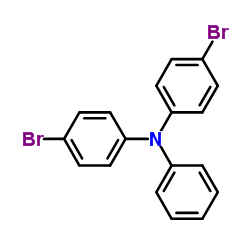
4,4'-Dibromotriphenylamine
- CAS No.81090-53-1
- GradeIndustrial / Pharmaceutical
- Availability● In Stock
High-purity 4,4'-Dibromotriphenylamine (CAS 81090-53-1) designed for advanced OLED synthesis. Reliable supply for electronic chemical manufacturing.
Request Bulk PricingProduct Technical Details
Product Overview
4,4'-Dibromotriphenylamine represents a critical structural component in the realm of advanced organic electronics and material science. As a specialized brominated derivative of the triphenylamine core, this compound serves as an essential building block for the synthesis of high-performance hole transport materials used in next-generation display technologies. Our manufacturing process ensures exceptional chemical stability and purity, making it an ideal candidate for researchers and industrial manufacturers focused on organic light-emitting diodes.
The molecular architecture of this substance facilitates efficient cross-coupling reactions, such as Suzuki or Buchwald-Hartwig aminations, which are pivotal in constructing complex conjugated systems. By utilizing our premium grade material, developers can achieve superior charge mobility and thermal stability in their final OLED devices. We adhere to strict production protocols to guarantee consistency across every batch supplied to our global partners, ensuring that your synthesis workflows proceed without interruption due to quality variances.
Technical Specifications
Quality control is paramount in the production of electronic chemicals where even minor impurities can affect device performance. Each lot undergoes rigorous analytical testing using high-performance liquid chromatography and other advanced methods to confirm compliance with established physical and chemical standards. The following table outlines the key parameters verified during our comprehensive quality assurance process:
| Parameter | Value |
|---|---|
| CAS Number | 81090-53-1 |
| Molecular Formula | C18H13Br2N |
| Molecular Weight | 403.11 g/mol |
| Appearance | White to light brown solid |
| Assay (HPLC) | ≥99.0% |
| Melting Point | 69°C |
| Density | 1.593 g/cm3 |
| Boiling Point | 470.7°C |
Industrial Applications
This intermediate is primarily utilized in the fabrication of organic light-emitting diodes and related optoelectronic devices. Its specific bromination pattern allows for precise functionalization, enabling chemists to tailor the electronic properties of the resulting polymers or small molecules. Common applications include the synthesis of hole injection layers and emissive layer materials that define the efficiency and lifespan of modern display panels.
- Production of hole transport materials for high-resolution display panels.
- Synthesis of conjugated polymers for organic photovoltaics and solar cells.
- Research and development of new organic semiconductor architectures.
- Component in high-efficiency solid-state lighting solutions.
Quality Assurance and Handling
We understand the sensitivity of organic synthesis processes to impurities and moisture. Therefore, our facility implements comprehensive quality management systems to minimize contaminants and ensure product integrity. The product is packaged in secure 25 kg drums or customized containers based on client requirements to prevent absorption and degradation during transit. Proper storage in a cool, ventilated environment is recommended to maintain optimal physical properties over extended periods. Certificates of Analysis are provided with every shipment to verify purity and specification compliance, supporting your regulatory and quality documentation needs.