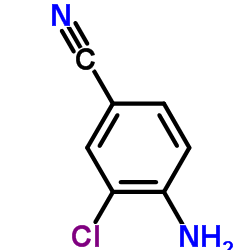
4-Amino-3-chlorobenzonitrile
- CAS No.21803-75-8
- GradeIndustrial / Pharmaceutical
- Availability● In Stock
High-purity 4-Amino-3-chlorobenzonitrile (CAS 21803-75-8) designed for advanced organic synthesis and pharmaceutical intermediate applications with reliable quality assurance.
Request Bulk PricingProduct Technical Details
Product Overview
4-Amino-3-chlorobenzonitrile is a highly specialized organic compound widely recognized for its versatility in complex chemical synthesis. As a critical building block, this substance features a unique structural arrangement combining amino, chloro, and nitrile functional groups on a benzene ring. This configuration provides exceptional reactivity, making it an indispensable precursor for the development of advanced pharmaceutical agents, agrochemical formulations, and specialized polymeric materials. Our production facility ensures that every batch meets rigorous international standards for purity and consistency.
The compound is synthesized through controlled chlorination and amination processes, resulting in a stable crystalline structure. Its physical properties, including a defined melting point and moderate density, facilitate easy handling and integration into various reaction pathways. Researchers and industrial chemists value this intermediate for its reliability in nucleophilic substitution reactions and its ability to serve as a core scaffold for constructing more complex molecular architectures.
Technical Specifications
We maintain strict quality control protocols to guarantee the chemical integrity of 4-Amino-3-chlorobenzonitrile. Each production lot undergoes comprehensive analysis using high-performance liquid chromatography (HPLC) and gas chromatography (GC) to verify assay levels and impurity profiles. The following table outlines the key physical and chemical parameters typically associated with our premium grade material:
| Parameter | Specification |
|---|---|
| Chemical Name | 4-Amino-3-chlorobenzonitrile |
| CAS Number | 21803-75-8 |
| Molecular Formula | C7H5ClN2 |
| Molecular Weight | 152.581 g/mol |
| Appearance | Off-white to light yellow crystalline powder |
| Assay (Purity) | ≥98.0% |
| Melting Point | 102-105 °C |
| Boiling Point | 277.8±25.0 °C at 760 mmHg |
| Density | 1.3±0.1 g/cm3 |
| Flash Point | 121.8±23.2 °C |
Industrial Applications
The primary utility of this chemical lies in its role as a versatile intermediate within the fine chemicals sector. Its specific substitution pattern allows for targeted modifications, enabling chemists to derive a wide array of downstream products. Key application areas include:
- Pharmaceutical Synthesis: Serving as a core structure for developing therapeutic agents targeting various biological pathways.
- Agrochemical Development: Used in the creation of herbicides and pesticides requiring specific aromatic substitution.
- Material Science: Acting as a monomer or modifier in the production of high-performance polymers and dyes.
- Custom Organic Synthesis: Providing a reliable starting material for contract research organizations and academic laboratories.
Quality Assurance and Packaging
As a global manufacturer, we prioritize supply chain reliability and product safety. Our facilities operate under stringent quality management systems to ensure batch-to-batch consistency. We provide a comprehensive Certificate of Analysis (COA) with every shipment, detailing test results against specified parameters. Packaging is designed to maintain product stability during transit, typically supplied in 25 kg drums lined with moisture-resistant materials. Custom packaging solutions are available to meet specific logistical requirements or large-scale industrial needs.
Storage and Handling
To preserve the chemical properties of 4-Amino-3-chlorobenzonitrile, proper storage conditions are essential. The material should be kept in a cool, well-ventilated area away from direct sunlight and sources of ignition. Containers must remain tightly sealed when not in use to prevent moisture absorption or contamination. Personnel handling this compound should adhere to standard safety protocols, including the use of appropriate personal protective equipment (PPE) such as gloves and safety goggles, to ensure a safe working environment.