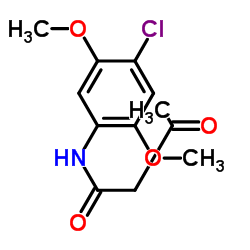
4'-Chloro-2',5'-dimethoxyacetoacetanilide
- CAS No.4433-79-8
- GradeIndustrial / Pharmaceutical
- Availability● In Stock
High-purity 4'-Chloro-2',5'-dimethoxyacetoacetanilide (CAS 4433-79-8), a key intermediate for azo pigment synthesis including C.I. Pigment Yellow 83 and 97.
Request Bulk PricingProduct Technical Details
Product Overview
4'-Chloro-2',5'-dimethoxyacetoacetanilide is a high-value aromatic intermediate widely employed in the industrial synthesis of high-performance azo pigments. With a certified purity of ≥99.0%, this compound serves as a critical coupling component in the production of colorants such as C.I. Pigment Yellow 83 and C.I. Pigment Yellow 97, which are extensively used in printing inks, plastics, and coatings due to their excellent lightfastness and thermal stability.
Chemical Identity and Specifications
| Molecular Formula | C₁₂H₁₄ClNO₄ |
|---|---|
| Molecular Weight | 271.70 g/mol |
| CAS Number | 4433-79-8 |
| Appearance | Light brown powder |
| Purity | ≥99.0% |
| Melting Point | 102–104°C |
| Density | 1.277 g/cm³ |
| Boiling Point | 432.7°C at 760 mmHg |
| Flash Point | 215.5°C |
| Refractive Index | 1.553 |
Industrial Applications
This compound is primarily utilized as a coupling component in diazo-based pigment manufacturing. Its electron-rich dimethoxy-substituted aniline core enables efficient electrophilic substitution during azo coupling reactions, yielding pigments with intense yellow hues and robust chemical resistance. It is not intended for pharmaceutical, cosmetic, or food applications, and strictly complies with industrial chemical safety standards.
- Essential building block for C.I. Pigment Yellow 83 and 97
- Enables high chroma and weather-resistant color formulations
- Compatible with standard industrial pigment synthesis protocols
- Supplied in 25 kg drums under controlled storage conditions
Handling and Storage
Store in a cool, dry, and well-ventilated warehouse away from direct sunlight and incompatible materials. Maintain container tightly closed to prevent moisture absorption. Standard industrial hygiene practices should be followed during handling.