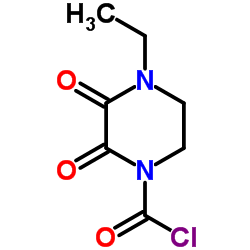
4-Ethyl-2,3-dioxo-1-piperazine carbonyl chloride
- CAS No.59703-00-3
- GradeIndustrial / Pharmaceutical
- Availability● In Stock
High-purity 4-Ethyl-2,3-dioxo-1-piperazine carbonyl chloride (CAS 59703-00-3), a key intermediate for β-lactam antibiotic synthesis.
Request Bulk PricingProduct Technical Details
Product Overview
4-Ethyl-2,3-dioxo-1-piperazine carbonyl chloride is a high-value heterocyclic building block widely employed in the pharmaceutical industry as a critical synthetic intermediate. With CAS number 59703-00-3 and molecular formula C7H9ClN2O3, this compound serves as an essential precursor in the production of advanced β-lactam antibiotics, including piperacillin and cefoperazone. Its rigid piperazine core functionalized with reactive carbonyl chloride and diketone moieties enables precise amide bond formation and structural diversification during complex API syntheses.
Specifications
| Molecular Weight | 204.61 g/mol |
|---|---|
| Appearance | White or off-white crystalline powder |
| Purity (HPLC) | ≥97.0% |
| Dioxo Piperazine Impurity | ≤2.0% |
| Absorbance at 400 nm | A ≤ 0.1 |
| Melting Point | 100 °C |
| Density | 1.408 g/cm³ |
| Boiling Point | 292.9 °C at 760 mmHg |
| Flash Point | 131 °C |
| Refractive Index | 1.525 |
Industrial Applications
This compound is exclusively utilized as a specialized intermediate in regulated pharmaceutical manufacturing environments. Its primary application lies in the synthesis of third-generation cephalosporin and ureidopenicillin antibiotics, where it contributes to the construction of the side-chain pharmacophore responsible for enhanced antimicrobial activity and β-lactamase stability. Due to its reactivity and moisture sensitivity, it is handled under controlled conditions by qualified professionals in GMP-compliant facilities.
- Enables efficient coupling in multi-step antibiotic syntheses
- Consistent high purity ensures reproducible reaction yields
- Complies with stringent quality standards for pharmaceutical intermediates
- Supplied with full analytical documentation including COA
Stored in tightly sealed containers in a cool, dry, and well-ventilated area away from incompatible materials. Standard packaging is 25 kg fiber drums, with custom options available upon request.