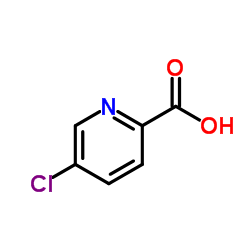
5-Chloropyridine-2-carboxylic Acid
- CAS No.86873-60-1
- GradeIndustrial / Pharmaceutical
- Availability● In Stock
High-purity 5-Chloropyridine-2-carboxylic Acid (CAS 86873-60-1) designed for advanced organic synthesis. Reliable supply with strict quality control for pharmaceutical and agrochemical intermediates.
Request Bulk PricingProduct Technical Details
Product Overview
5-Chloropyridine-2-carboxylic Acid is a vital heterocyclic building block extensively utilized in modern organic synthesis and medicinal chemistry. As a chlorinated pyridine derivative, this compound serves as a crucial intermediate for constructing complex molecular architectures found in pharmaceuticals, agrochemicals, and functional materials. Our manufacturing process ensures exceptional purity levels, making it an ideal candidate for sensitive synthetic routes requiring high reliability and consistency.
The presence of the chloro substituent at the fifth position enhances the reactivity of the molecule, facilitating various cross-coupling reactions such as Suzuki, Heck, and Buchwald-Hartwig aminations. This versatility allows chemists to efficiently introduce diverse functional groups, accelerating the development of new drug candidates and advanced chemical entities.
Key Specifications
| Parameter | Specification |
|---|---|
| CAS Number | 86873-60-1 |
| Molecular Formula | C6H4ClNO2 |
| Molecular Weight | 157.555 g/mol |
| Appearance | White to off-white crystalline powder |
| Assay (Purity) | ≥98.0% |
| Moisture Content | ≤0.5% |
| Packing | 25 kg/drum or customized |
Physical and Chemical Properties
Understanding the physicochemical profile of 5-Chloropyridine-2-carboxylic Acid is essential for safe handling and optimal process design. The compound exhibits a density of approximately 1.5±0.1 g/cm3, indicating a compact crystalline structure. Its boiling point is recorded at 310.3±22.0 °C at 760 mmHg, reflecting thermal stability under standard atmospheric conditions. The flash point is measured at 141.5±22.3 °C, which classifies it as a combustible material requiring standard industrial safety precautions during storage and transport.
The molecular structure combines the electron-deficient nature of the pyridine ring with the electron-withdrawing effect of the carboxylic acid group. This combination influences solubility profiles and reaction kinetics, making it compatible with a wide range of organic solvents commonly used in laboratory and pilot-scale synthesis.
Industrial Applications
This chemical intermediate finds broad application across multiple sectors. In the pharmaceutical industry, it acts as a precursor for synthesizing kinase inhibitors, antiviral agents, and anti-inflammatory drugs. The chloro group serves as a strategic handle for late-stage functionalization, enabling medicinal chemists to optimize biological activity and pharmacokinetic properties efficiently.
In agrochemical development, the compound contributes to the creation of novel herbicides and pesticides with improved environmental profiles. Additionally, it is used in the production of specialty polymers and ligands for catalytic systems. Our global manufacturing network supports diverse research and production needs, ensuring timely delivery for both small-scale R&D and large-scale commercial manufacturing.
Quality Assurance and Packaging
Quality is paramount in our production facility. Every batch of 5-Chloropyridine-2-carboxylic Acid undergoes rigorous testing using advanced analytical techniques including HPLC, GC-MS, and NMR spectroscopy. We provide a comprehensive Certificate of Analysis (COA) with each shipment, detailing purity, impurity profiles, and physical constants to ensure compliance with your internal standards.
Standard packaging consists of 25 kg drums lined with moisture-resistant materials to maintain product integrity during transit. Custom packaging solutions are available upon request to meet specific logistical requirements. We recommend storing the product in a cool, ventilated place away from direct sunlight and incompatible substances to preserve its chemical stability over extended periods.