5-O-Trityl-2,3-anhydrothymidine
- CAS No.25442-42-6
- GradeIndustrial / Pharmaceutical
- Availability● In Stock
High-purity pharmaceutical intermediate for nucleoside analog synthesis. ≥99% purity with comprehensive quality documentation.
Request Bulk PricingProduct Technical Details
Product Overview
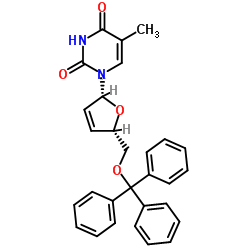
5-O-Trityl-2,3-anhydrothymidine is a specialized nucleoside intermediate designed for advanced pharmaceutical synthesis. This compound features a trityl protection group at the 5-prime position and a reactive 2,3-anhydro bridge, making it an essential building block in the production of antiretroviral agents. Our manufacturing process ensures exceptional chemical stability and consistency, meeting the rigorous demands of modern medicinal chemistry.
As a key precursor in the synthesis of thymidine analogs, this material plays a critical role in the development of nucleoside reverse transcriptase inhibitors. The strategic placement of the triphenylmethyl group protects the hydroxyl functionality during subsequent reaction steps, while the anhydro ring provides a site for selective nucleophilic opening. This dual functionality allows chemists to construct complex molecular architectures with high precision.
Chemical Properties
The molecular structure of this intermediate is defined by its specific stereochemistry and functional group arrangement. The trityl group offers robust protection against unwanted side reactions, ensuring high yields during downstream processing. The anhydro moiety introduces ring strain that can be exploited for regioselective transformations. These properties make it a preferred choice for synthesizing high-value pharmaceutical active ingredients.
Our production facility utilizes state-of-the-art purification techniques to remove trace impurities. Each batch undergoes rigorous analytical testing to confirm identity and potency. We maintain strict control over physical parameters such as density and refractive index to ensure batch-to-batch reproducibility. This level of quality control is essential for partners operating under Good Manufacturing Practice guidelines.
Specifications
| Parameter | Value |
|---|---|
| Chemical Name | 5-O-Trityl-2,3-anhydrothymidine |
| CAS Number | 25442-42-6 |
| Molecular Formula | C29H26N2O4 |
| Molecular Weight | 466.53 g/mol |
| Appearance | White crystalline powder |
| Purity | ≥99% |
| Total Impurities | Less than 0.3% |
| Moisture Content | Less than 0.3% |
| Density | 1.27 g/cm3 |
| Boiling Point | 595.7°C at 760 mmHg |
Industrial Applications
This intermediate is primarily utilized in the manufacture of nucleoside analogs used in antiretroviral therapy. It serves as a vital stepping stone in the synthesis pathway for zidovudine and related compounds. The high purity specification ensures that downstream reactions proceed efficiently without contamination issues. Pharmaceutical companies rely on this material to maintain the integrity of their final drug products.
Beyond antiretroviral applications, this compound is valuable in research settings focused on nucleoside chemistry. Its well-defined reactivity profile makes it suitable for exploring new synthetic routes and mechanistic studies. We support both large-scale commercial production and smaller research quantities to accommodate diverse client needs.
Quality Assurance and Storage
We adhere to international quality standards to guarantee product safety and efficacy. Every shipment is accompanied by a Certificate of Analysis detailing test results against specifications. Our packaging solutions are designed to protect the material from environmental factors during transit. Customers can trust in the reliability of our supply chain and documentation.
For optimal stability, store this product in a cool and dry well-closed container. It is important to keep the material away from moisture and strong light or heat sources. Proper storage conditions preserve the chemical integrity of the anhydro ring and prevent degradation of the trityl group. Following these guidelines ensures the material remains suitable for use throughout its shelf life.