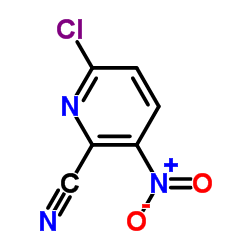
6-Chloro-2-cyano-3-nitropyridine
- CAS No.93683-65-9
- GradeIndustrial / Pharmaceutical
- Availability● In Stock
High purity 6-Chloro-2-cyano-3-nitropyridine designed for advanced organic synthesis. Reliable supply with comprehensive quality documentation for industrial scaling.
Request Bulk PricingProduct Technical Details
Product Overview
6-Chloro-2-cyano-3-nitropyridine is a highly specialized heterocyclic compound recognized for its versatility in modern chemical synthesis. As a key pyridine derivative, this substance features a unique arrangement of chloro, cyano, and nitro functional groups on the pyridine ring, making it an invaluable building block for complex molecular architectures. Our manufacturing process ensures consistent quality and high purity levels, catering to the rigorous demands of pharmaceutical and agrochemical research sectors.
This compound serves as a critical precursor in the development of various bioactive molecules. The presence of the electron-withdrawing nitro and cyano groups enhances the reactivity of the pyridine ring, facilitating diverse nucleophilic substitution reactions. Researchers and process chemists rely on this intermediate for constructing sophisticated heterocyclic systems that form the backbone of many therapeutic agents and functional materials.
Technical Specifications
We adhere to strict quality control protocols to guarantee that every batch meets or exceeds industry standards. The following table outlines the key physical and chemical properties verified through our analytical laboratories.
| Parameter | Value |
|---|---|
| Chemical Name | 6-Chloro-2-cyano-3-nitropyridine |
| CAS Number | 93683-65-9 |
| Molecular Formula | C6H2ClN3O2 |
| Molecular Weight | 183.552 g/mol |
| Appearance | Yellow crystalline powder |
| Assay | ≥98.0% |
| Moisture Content | ≤0.5% |
| Density | 1.6±0.1 g/cm3 |
| Boiling Point | 347.2±42.0 °C at 760 mmHg |
| Flash Point | 163.8±27.9 °C |
Industrial Applications
The primary utility of 6-Chloro-2-cyano-3-nitropyridine lies in its role as an organic synthesis intermediate. It is extensively utilized in the pharmaceutical industry for the preparation of kinase inhibitors and other targeted therapies. The chloro group allows for palladium-catalyzed cross-coupling reactions, while the nitro group can be reduced to an amine for further functionalization.
Beyond pharmaceuticals, this chemical finds applications in agrochemical synthesis, where it contributes to the development of novel pesticides and herbicides. Its stability and reactivity profile make it suitable for multi-step synthesis routes requiring robust intermediates. Additionally, material scientists explore its potential in creating specialized polymers and electronic materials due to its electron-deficient aromatic structure.
Quality Assurance and Handling
Our commitment to excellence extends beyond production to packaging and logistics. Each drum is sealed to prevent moisture ingress and contamination during transit. We provide a comprehensive Certificate of Analysis (COA) with every shipment, detailing batch-specific test results. For storage, we recommend keeping the product in a cool, ventilated area away from direct sunlight and incompatible substances. Proper handling procedures should be followed to ensure safety and maintain product integrity throughout its shelf life.