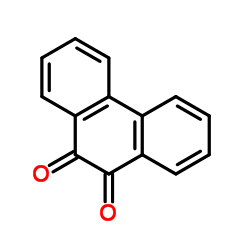
9,10-Phenanthroquinone
- CAS No.84-11-7
- GradeIndustrial / Pharmaceutical
- Availability● In Stock
High-purity 9,10-Phenanthroquinone (CAS 84-11-7) designed for advanced organic synthesis and industrial applications. Reliable supply with strict quality control.
Request Bulk PricingProduct Technical Details
Product Overview
9,10-Phenanthroquinone is a specialized organic compound characterized by its distinct quinone structure fused within a phenanthrene backbone. As a critical chemical intermediate, it plays a pivotal role in various industrial synthesis pathways and functional material development. Our facility produces this compound under rigorous quality management systems to ensure consistent molecular integrity and high purity levels suitable for demanding research and manufacturing environments.
The chemical stability and reactivity of this quinone derivative make it an essential building block for chemists focusing on complex organic transformations. Whether utilized in the creation of advanced photoconductive materials or as a precursor in agricultural chemistry, the material delivers reliable performance metrics that align with international industrial standards.
Key Specifications
We maintain strict control over production parameters to guarantee that every batch meets or exceeds the specified analytical requirements. The following table outlines the critical quality attributes verified during our internal quality assurance processes.
| Items of Analysis | Standard of Analysis | Test Results |
|---|---|---|
| Appearance | Yellow powder | Conform |
| Assay | ≥98.5% | 99.14% |
| Moisture | ≤0.5% | 0.33% |
| Melting point | 207-209℃ | 207.2-208.4℃ |
| Conclusion | Conforms to Factory Standard | |
Industrial Applications
The versatility of 9,10-Phenanthroquinone extends across multiple sectors, driven by its unique electrochemical and biological properties. In the realm of organic synthesis, it serves as a fundamental reagent for producing benzranthrone and other complex polycyclic structures. Its utility is further recognized in the electronics industry, where it functions as a key component in electrophotography and photoconductive material fabrication.
Additionally, this compound exhibits significant biological activity, making it valuable in agricultural chemistry. It is employed as a fungicide and seed dressing agent to protect crops from grain smut and cotton seedling diseases. Furthermore, through specific chemical modifications such as treatment with sodium hydroxide, it can be converted into plant growth regulators, highlighting its adaptability in agrochemical formulations. It also serves as an effective preservative in pulp processing industries.
Storage and Handling
To maintain optimal chemical stability, proper storage conditions are essential. The material should be kept in a well-ventilated warehouse environment with low temperature controls. It is imperative to store this product separately from food raw materials to prevent any cross-contamination. The compound is generally stable under recommended conditions but should be kept away from strong oxidizing agents to avoid unintended reactions. Our packaging ensures protection against moisture and light during transit, preserving the integrity of the yellow crystalline powder until it reaches your facility.