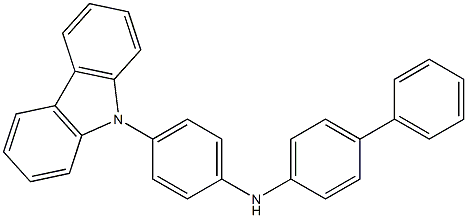
Biphenyl-4-yl-(4-carbazol-9-yl-phenyl)-amine
- CAS No.1210470-43-1
- GradeIndustrial / Pharmaceutical
- Availability● In Stock
High-purity CPBPA OLED intermediate used in organic light-emitting diode synthesis. Available in bulk with strict quality control and custom packaging options.
Request Bulk PricingProduct Technical Details
Product Overview
Biphenyl-4-yl-(4-carbazol-9-yl-phenyl)-amine, frequently referred to by its abbreviation CPBPA, is a sophisticated organic compound designed specifically for the advanced electronics industry. This material serves as a crucial building block in the fabrication of organic light-emitting diodes (OLEDs). Our manufacturing process ensures that every batch meets rigorous international standards for purity and performance, making it an ideal choice for researchers and industrial producers alike.
The chemical structure combines a robust biphenyl unit with a carbazole moiety, providing excellent thermal stability and charge transport properties. These characteristics are essential for enhancing the efficiency and lifespan of next-generation display technologies and lighting solutions. As a leading global manufacturer, we prioritize consistency and reliability in every shipment.
Technical Specifications
| Parameter | Value |
|---|---|
| Chemical Name | Biphenyl-4-yl-(4-carbazol-9-yl-phenyl)-amine |
| CAS Number | 1210470-43-1 |
| Synonyms | CPBPA |
| Molecular Formula | C30H22N2 |
| Molecular Weight | 410.51 g/mol |
| Appearance | White powder |
| Assay (Purity) | ≥98.0% |
| Packing | 25 kg/drum or customized |
Industrial Applications
This intermediate is primarily utilized in the synthesis of OLED emissive layers and charge transport materials. The carbazole derivative structure facilitates effective hole transport, which is vital for balancing charge injection in organic electronic devices. Manufacturers use CPBPA to develop high-efficiency panels for smartphones, televisions, and wearable technology. Its compatibility with various deposition techniques makes it a versatile component in modern optoelectronic manufacturing processes.
Furthermore, the high purity level ensures minimal impurities that could otherwise quench luminescence or degrade device performance over time. By integrating this material into your production line, you can achieve superior color purity and energy efficiency in your final products.
Quality Assurance And Safety
We implement a comprehensive quality control system that includes high-performance liquid chromatography (HPLC) and nuclear magnetic resonance (NMR) spectroscopy for every batch. Each shipment is accompanied by a Certificate of Analysis (COA) to verify compliance with specified parameters. Our facility adheres to strict safety protocols to handle chemical substances responsibly, ensuring environmental protection and worker safety throughout the production cycle.
Storage And Handling
To maintain optimal quality, store this product in a cool, ventilated area away from direct sunlight and moisture. Keep the container tightly closed when not in use. Proper storage conditions prevent degradation and ensure the material remains ready for use in sensitive synthesis reactions. We offer flexible packaging solutions, including 25 kg drums, to accommodate various logistical requirements and customer preferences.