Diacetin
- CAS No.25395-31-7
- GradeIndustrial / Pharmaceutical
- Availability● In Stock
High purity Diacetin serving as an efficient organic solvent and chemical intermediate for resin and cellulose processing.
Request Bulk PricingProduct Technical Details
Product Overview
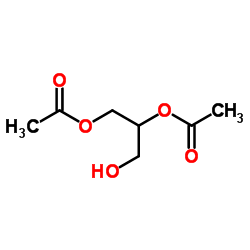
Diacetin, chemically known as Glycerol Diacetate, is a versatile organic compound derived from the esterification of glycerol. Recognized for its clarity and stability, this substance presents as a colorless, transparent oily liquid under standard conditions. As a key member of the acetin family, it occupies a critical position between monoacetin and triacetin in terms of chemical structure and functional application. Our manufacturing process ensures high consistency and reliability, making it a preferred choice for industries requiring precise chemical intermediates and effective solvent systems.
The compound is valued not only for its solvency power but also for its favorable safety profile compared to many traditional organic solvents. It is widely utilized in complex synthesis pathways and formulation processes where compatibility with resins and polymers is essential. We adhere to strict quality control protocols to guarantee that every batch meets rigorous international standards for purity and performance.
Physical And Chemical Properties
Understanding the physical characteristics of Diacetin is vital for its proper handling and integration into industrial processes. The substance exhibits a density of approximately 1.1875 g/cm³, indicating a heavier-than-water liquid phase. Its boiling point is recorded at 280 degrees Celsius, providing thermal stability during high-temperature applications. The melting point remains low at -30 degrees Celsius, ensuring fluidity even in cooler storage environments.
Safety parameters are equally important for operational planning. The flash point exceeds 230 degrees Fahrenheit, classifying it as a combustible liquid with manageable risk profiles when handled correctly. The refractive index is typically around 1.440 at 20 degrees Celsius. Chemically, the material remains stable under normal temperatures and pressures, reducing the risk of unintended decomposition during storage or transport. These properties collectively make it a robust candidate for demanding chemical environments.
Technical Specifications
Quality assurance is paramount in our production facility. The following table outlines the typical analysis standards and test results for our premium grade Diacetin. Please note that specific batch data may vary slightly within the acceptable standard ranges provided in the Certificate of Analysis.
| Items Of Analysis | Standard Of Analysis | Typical Test Results |
|---|---|---|
| Monacetin Content | 5-25% | 20% |
| Diacetin Content | 45-55% | 49.0% |
| Triacetin Content | 25-45% | 30.5% |
| Free Acid (CH3COOH) | ≤1% | 0.37% |
| Moisture Content | ≤0.5% | 0.09% |
| Arsenic (As) | ≤0.0003% | <0.0003% |
| Heavy Metals | ≤0.0005% | <0.0005% |
| Conclusion | Conforms To Factory Standard | |
Industrial Applications
The primary utility of Diacetin lies in its capability as a high-performance solvent. It is extensively applied in the dissolution of resins, camphor, and various cellulose derivatives. This makes it indispensable in the coatings, ink, and polymer industries where precise viscosity and solvency are required. Furthermore, it acts as an effective carrier solvent for materials such as shellac and other natural resins, facilitating smoother processing and application.
Beyond solvency, Diacetin serves as a crucial intermediate in organic synthesis. Its chemical structure allows it to participate in various esterification and substitution reactions, enabling the production of more complex pharmaceutical and agricultural compounds. The product is recognized as an efficient and safe organic solvent option, contributing to greener manufacturing processes by reducing reliance on more hazardous volatile organic compounds. Its low toxicity profile enhances workplace safety during formulation and handling.
Storage And Handling Guidelines
To maintain the integrity and quality of Diacetin, proper storage conditions must be observed. Containers should remain tightly closed when not in use to prevent moisture absorption and contamination. The material should be stored in a cool, dry, and well-ventilated area, away from incompatible substances such as strong oxidizing agents or strong bases. Adhering to these guidelines ensures long-term stability and safety. We recommend consulting the full Safety Data Sheet (SDS) for comprehensive handling instructions and emergency measures.