Dicyclohexylchlorophosphine
- CAS No.16523-54-9
- GradeIndustrial / Pharmaceutical
- Availability● In Stock
High-purity Dicyclohexylchlorophosphine designed for advanced ligand synthesis and organic catalysis applications.
Request Bulk PricingProduct Technical Details
Product Overview
Dicyclohexylchlorophosphine is a specialized organophosphorus compound widely recognized for its critical role in modern organic synthesis and catalytic processes. As a key intermediate, this reagent serves as a fundamental building block for the preparation of various phosphine ligands, which are essential in transition metal catalysis. Our manufacturing process ensures exceptional purity levels, making it suitable for demanding research and industrial applications where consistency and reliability are paramount.
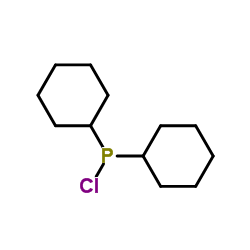
The chemical structure features two cyclohexyl groups attached to a phosphorus atom, which also bears a chlorine substituent. This configuration provides significant steric bulk and electronic properties that are highly desirable in the design of catalysts for cross-coupling reactions. We adhere to strict quality control protocols to guarantee that every batch meets rigorous international standards for chemical intermediates.
Key Specifications
| Parameter | Value |
|---|---|
| CAS Number | 16523-54-9 |
| Molecular Formula | C12H22ClP |
| Molecular Weight | 232.73 g/mol |
| Appearance | Colorless liquid |
| Purity (Assay) | ≥98.0% |
| Density | 1.054 g/mL at 25 °C |
| Boiling Point | 297.5±7.0 °C at 760 mmHg |
| Flash Point | 133.7±18.2 °C |
| Refractive Index | n20/D 1.533 |
Industrial Applications
This compound is primarily utilized in the pharmaceutical and fine chemical industries for the synthesis of complex ligands. These ligands are subsequently employed in palladium-catalyzed coupling reactions, such as Suzuki-Miyaura and Buchwald-Hartwig aminations. The high steric demand of the dicyclohexyl groups enhances the stability and activity of the resulting metal complexes, facilitating efficient bond formation under mild conditions.
- Preparation of bulky phosphine ligands for homogeneous catalysis.
- Intermediate in the production of advanced organic materials.
- Reagent for research in organometallic chemistry.
- Component in the development of novel catalytic systems.
Storage and Handling
Due to its reactive nature, Dicyclohexylchlorophosphine requires careful handling and storage. It reacts violently with water and moisture, releasing corrosive hydrogen chloride gas. Therefore, it must be stored in a cool, ventilated place under an inert atmosphere such as nitrogen or argon. Containers should be tightly sealed to prevent exposure to atmospheric humidity. Personnel must wear appropriate personal protective equipment, including chemical-resistant gloves and eye protection, during handling operations. In case of spillage, absorb with inert material and dispose of according to local hazardous waste regulations.