2,3-Difluoro-4-propoxyphenylboronic Acid
- CAS No.212837-49-5
- GradeIndustrial / Pharmaceutical
- Availability● In Stock
High-purity 2,3-Difluoro-4-propoxyphenylboronic acid (CAS 212837-49-5) designed for pharmaceutical and OLED intermediate synthesis with reliable quality assurance.
Request Bulk PricingProduct Technical Details
Product Overview
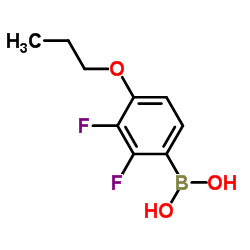
2,3-Difluoro-4-propoxyphenylboronic Acid is a specialized fluorinated organic compound widely utilized in modern medicinal chemistry and advanced material science. As a critical building block, this boronic acid derivative facilitates efficient carbon-carbon bond formation through palladium-catalyzed cross-coupling reactions. Our manufacturing process ensures exceptional batch-to-batch consistency, making it an ideal choice for research and development teams focused on novel therapeutic agents and organic light-emitting diode technologies.
The presence of fluorine atoms at the 2 and 3 positions significantly enhances the metabolic stability and lipophilicity of downstream molecules. This chemical profile is particularly valuable in the design of kinase inhibitors and other targeted therapies. We maintain strict quality control protocols to guarantee that every shipment meets the rigorous demands of global pharmaceutical supply chains.
Technical Specifications
Our production facility adheres to international standards for fine chemical manufacturing. The following table outlines the key physical and chemical properties verified through our quality assurance laboratory.
| Parameter | Specification |
|---|---|
| CAS Number | 212837-49-5 |
| Molecular Formula | C9H11BF2O3 |
| Molecular Weight | 215.99 g/mol |
| Appearance | White powder |
| Assay (Purity) | ≥98.0% |
| Water Content | ≤0.50% |
| Density | 1.3±0.1 g/cm3 |
| Boiling Point | 328.6±52.0 °C at 760 mmHg |
| Flash Point | 152.5±30.7 °C |
Industrial Applications
This compound serves as a versatile intermediate in multiple high-value sectors. In the pharmaceutical industry, it is employed as a key precursor for synthesizing complex active pharmaceutical ingredients (APIs). The fluorinated structure allows chemists to fine-tune the electronic properties of drug candidates, improving binding affinity and bioavailability.
Additionally, the material finds significant application in the electronics sector, specifically within the production of OLED intermediates. The stability provided by the boronic acid group enables precise polymerization processes required for high-performance display materials. Our clients rely on our supply chain integrity to maintain their own production schedules without interruption.
Quality Assurance and Packaging
We understand that purity is paramount in organic synthesis. Each batch undergoes comprehensive analysis using HPLC and NMR spectroscopy to confirm identity and purity levels. A Certificate of Analysis (COA) is provided with every order to document compliance with specified parameters.
- Standard packaging includes 25kg drums designed for safe transport.
- Custom packaging solutions are available upon request to suit specific logistical needs.
- Products are sealed to prevent moisture absorption and maintain stability during transit.
Storage and Handling
To preserve the integrity of 2,3-Difluoro-4-propoxyphenylboronic Acid, proper storage conditions are essential. The material should be kept in a cool, dry environment with adequate ventilation. Containers must remain tightly closed when not in use to minimize exposure to atmospheric moisture, which can affect boronic acid stability over extended periods. Adhering to these guidelines ensures optimal performance during your synthesis workflows.