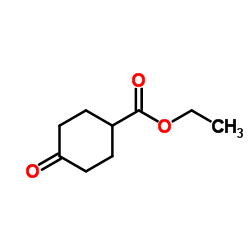
Ethyl 4-Oxocyclohexanecarboxylate
- CAS No.17159-79-4
- GradeIndustrial / Pharmaceutical
- Availability● In Stock
High-purity Ethyl 4-Oxocyclohexanecarboxylate (CAS 17159-79-4), a versatile cyclohexanone-derived intermediate for enzymatic and organic synthesis applications.
Request Bulk PricingProduct Technical Details
Product Overview
Ethyl 4-Oxocyclohexanecarboxylate is a high-value cyclic ketone ester widely employed as a key building block in advanced organic synthesis and biocatalytic research. With the CAS number 17159-79-4 and molecular formula C9H14O3, this compound features a reactive 4-oxo group on the cyclohexane ring combined with an ethyl carboxylate functionality, enabling diverse chemical transformations. It is particularly valued in studies involving cyclohexanone monooxygenase (CHMO) and engineered enzyme variants, serving as a model substrate for oxidation and Baeyer-Villiger reactions.
Specifications
| Molecular Formula | C9H14O3 |
|---|---|
| Molecular Weight | 170.21 g/mol |
| Density | 1.068 g/mL at 25 °C |
| Boiling Point | 150–152 °C at 40 mm Hg |
| Refractive Index | n20/D 1.461 |
| Flash Point | >230 °F |
| Appearance | Colorless Liquid |
| Purity | ≥99.0% |
| Water Content | ≤0.5% |
| Sulfated Ash | ≤0.1% |
| Heavy Metals | ≤10 ppm |
| Total Impurities | ≤0.2% |
Industrial Applications
This intermediate is primarily utilized in pharmaceutical and fine chemical R&D settings where controlled functionalization of cyclohexanone scaffolds is required. Key application areas include:
- Enzymatic biotransformation studies, especially with Baeyer-Villiger monooxygenases
- Synthesis of chiral lactones and spirocyclic compounds
- Preparation of complex heterocyclic systems for drug discovery
- Development of novel synthetic routes requiring regioselective ketone reactivity
Its dual functionality allows chemists to selectively manipulate either the ketone or ester moiety, making it a flexible synthon in multi-step sequences.
Handling and Storage
Ethyl 4-Oxocyclohexanecarboxylate should be stored in a tightly sealed container under inert atmosphere when possible. Keep in a cool, dry, and well-ventilated area away from oxidizing agents, strong bases, and heat sources. Standard industrial hygiene practices are recommended during handling.