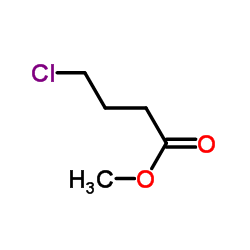
Methyl 4-Chlorobutanoate
- CAS No.3153-37-5
- GradeIndustrial / Pharmaceutical
- Availability● In Stock
Methyl 4-Chlorobutanoate (CAS 3153-37-5) is a high-purity (>98%) chlorinated ester widely used as a key building block in organic and pharmaceutical synthesis.
Request Bulk PricingProduct Technical Details
Product Overview
Methyl 4-Chlorobutanoate (CAS 3153-37-5) is a versatile chlorinated aliphatic ester extensively employed as a critical intermediate in the synthesis of active pharmaceutical ingredients (APIs), agrochemicals, and specialty organic compounds. With a molecular formula of C5H9ClO2 and a molecular weight of 136.58 g/mol, this compound features a reactive terminal chlorine atom and an ester functional group, enabling diverse nucleophilic substitution and cyclization reactions.
Specifications
| Molecular Formula | C5H9ClO2 |
|---|---|
| Molecular Weight | 136.58 g/mol |
| Appearance | Clear colourless liquid |
| Purity | ≥98.0% |
| Moisture Content | ≤0.2% |
| Impurity | ≤0.5% |
| Density | 1.12 g/mL at 25 °C |
| Boiling Point | 175–176 °C |
| Flash Point | 139 °F (59.4 °C) |
| Refractive Index | n20/D 1.433 |
Industrial Applications
As a bifunctional synthon, Methyl 4-Chlorobutanoate serves as a foundational intermediate in multi-step synthetic pathways. Its primary applications include:
- Construction of γ-lactam and pyrrolidine ring systems prevalent in neurological and cardiovascular therapeutics.
- Synthesis of quaternary ammonium compounds and cationic surfactants.
- Preparation of polymer modifiers and crosslinking agents in advanced material science.
- Use in the development of novel prodrugs and bioconjugation linkers due to its controlled reactivity profile.
Manufacturers leverage its high chemical stability and selectivity under standard reaction conditions to ensure reproducible yields in large-scale GMP environments.
Handling and Storage
Store in a tightly sealed container in a cool, dry, and well-ventilated area away from heat, sparks, open flames, and incompatible materials such as strong oxidizers or bases. Standard industrial hygiene practices, including use of PPE and adequate ventilation, are recommended during handling.