Propyl Isocyanate
- CAS No.110-78-1
- GradeIndustrial / Pharmaceutical
- Availability● In Stock
High-purity propyl isocyanate (CAS 110-78-1), a key building block for agrochemical intermediates such as iprodione. Supplied in industrial-grade quality with ≥98.0% assay.
Request Bulk PricingProduct Technical Details
Product Overview
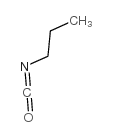
Propyl isocyanate (CAS 110-78-1) is a reactive aliphatic isocyanate widely employed as a chemical intermediate in the synthesis of specialty agrochemicals, including the fungicide iprodione (CAS 36734-19-7). This compound belongs to the isocyanate family and features high reactivity toward nucleophiles such as alcohols, amines, and water, making it valuable in controlled organic synthesis environments.
Specifications
| Molecular Formula | C₄H₇NO |
|---|---|
| Molecular Weight | 85.10 g/mol |
| Appearance | Yellow transparent liquid |
| Assay | ≥98.0% |
| Density | 0.908 g/mL at 25 °C |
| Boiling Point | 83–84 °C |
| Melting Point | -30 °C |
| Flash Point | 32 °F (0 °C) |
| Vapor Pressure | 83.9 mmHg at 25 °C |
| Refractive Index | n²⁰/D 1.394 |
Industrial Applications
As a versatile intermediate, propyl isocyanate is primarily utilized in the agricultural chemical sector for the production of selective fungicides. Its role in constructing urea and carbamate functionalities enables efficient routes to bioactive molecules. Due to its moisture sensitivity and volatility, it must be handled under anhydrous conditions and stored in tightly sealed containers.
- Serves as a critical precursor in the synthesis of iprodione and related phenylurea derivatives
- Used in research-scale development of novel isocyanate-based polymers and coatings
- Requires strict safety protocols due to its lachrymatory nature and potential respiratory sensitization
Packaging is typically provided in 200 kg steel drums with nitrogen padding to ensure stability. Custom packaging options are available upon request. Storage should occur in a cool, dry, and well-ventilated area away from heat sources and incompatible materials such as acids, bases, and oxidizing agents.