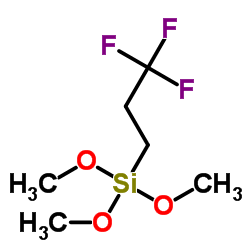
Trimethoxy(3,3,3-trifluoropropyl)silane
- CAS No.429-60-7
- GradeIndustrial / Pharmaceutical
- Availability● In Stock
High purity Trimethoxy(3,3,3-trifluoropropyl)silane serves as a critical intermediate for fluorosilicone fluids and resins, offering exceptional stability and reactivity for industrial synthesis.
Request Bulk PricingProduct Technical Details
Product Overview
Trimethoxy(3,3,3-trifluoropropyl)silane is a specialized organosilicon compound designed for high-performance industrial applications. As a key fluorinated silane coupling agent, it bridges the gap between organic polymers and inorganic substrates, providing superior thermal stability and chemical resistance. Our manufacturing process ensures consistent quality, making it an ideal choice for producers of advanced fluorosilicone materials.
This compound features a trifluoropropyl group attached to a trimethoxysilane backbone, enabling unique surface modification properties. The presence of fluorine atoms imparts oleophobic and hydrophobic characteristics, which are essential for creating durable coatings and sealants in demanding environments. We prioritize strict quality control measures to guarantee batch-to-batch consistency for large-scale production needs.
Technical Specifications
| Parameter | Value |
|---|---|
| CAS Number | 429-60-7 |
| Molecular Formula | C6H13F3O3Si |
| Molecular Weight | 218.25 g/mol |
| Purity (GC) | ≥99.0% |
| Appearance | Colorless clear liquid |
| Density | 1.142 g/cm3 |
| Boiling Point | 144°C |
| Flash Point | 38°C |
| Refractive Index | 1.355 |
Industrial Applications
The primary utility of this silane lies in the synthesis of fluorosilicone fluids and resins. These downstream products are widely utilized in aerospace, automotive, and electronics industries due to their ability to withstand extreme temperatures and aggressive chemicals. By incorporating this intermediate into polymer chains, manufacturers can enhance the fuel resistance and low-temperature flexibility of final rubber compounds.
Additionally, it serves as a surface treatment agent for glass, metals, and minerals, improving adhesion in composite materials. The methoxy groups hydrolyze readily to form silanol groups, which condense with hydroxyl groups on substrate surfaces. This reaction creates robust covalent bonds, ensuring long-term durability in coatings and adhesives. Our technical team supports clients with formulation guidance to optimize performance in specific application scenarios.
Quality Assurance and Handling
We adhere to rigorous international standards for chemical production. Each batch undergoes comprehensive testing via gas chromatography to verify purity levels exceeding 99.0%. A Certificate of Analysis (COA) is provided with every shipment to document compliance with specified parameters. Proper handling is essential to maintain product integrity during storage and transport.
Store this material in a cool, ventilated area away from direct sunlight and moisture sources. Containers should remain tightly sealed to prevent hydrolysis caused by atmospheric humidity. Safety data sheets (SDS) are available upon request, detailing appropriate personal protective equipment and emergency measures. We offer flexible packaging options, including 210-liter drums, to accommodate varying production scales and logistical requirements.