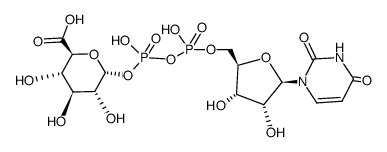
UDP-α-D-Glucuronic Acid
- CAS No.2616-64-0
- GradeIndustrial / Pharmaceutical
- Availability● In Stock
High-purity UDP-α-D-Glucuronic Acid (CAS 2616-64-0), a key nucleotide sugar intermediate for polysaccharide biosynthesis and glucuronidation reactions in pharmaceutical and biochemical research.
Request Bulk PricingProduct Technical Details
Product Overview
UDP-α-D-Glucuronic Acid (CAS 2616-64-0) is a critical nucleoside diphosphate sugar that functions as a high-energy donor of glucuronic acid in a wide array of biochemical pathways. As an essential metabolic intermediate, it plays a pivotal role in the biosynthesis of glycosaminoglycans, proteoglycans, and other complex carbohydrates vital to cellular structure and signaling. This compound is also a central substrate in phase II drug metabolism, where it enables the formation of glucuronide conjugates to enhance the solubility and excretion of xenobiotics and endogenous compounds.
Specifications
| Molecular Formula | C₁₅H₂₂N₂O₁₈P₂ |
|---|---|
| Molecular Weight | 580.29 g/mol |
| Exact Mass | 580.034 |
| PSA | 333.68 Ų |
| Appearance | White to off-white powder |
| Assay | ≥99.0% |
| Storage | Store in a cool, dry, and well-ventilated area |
| Packaging | 5 kg/bag; custom packaging available upon request |
Industrial Applications
UDP-α-D-Glucuronic Acid serves primarily as a building block in advanced organic synthesis and biotechnological applications. Key uses include:
- Enzymatic synthesis of glycosaminoglycans such as hyaluronic acid and chondroitin sulfate
- Substrate for UDP-glucuronosyltransferase (UGT) enzymes in drug metabolism studies
- Precursor for the epimerization to UDP-iduronic acid, used in heparan sulfate biosynthesis
- Research tool in glycobiology, enzymology, and metabolic pathway engineering
Due to its high reactivity and specificity, this intermediate is widely employed by pharmaceutical developers, diagnostic kit manufacturers, and academic laboratories engaged in carbohydrate chemistry and drug detoxification research.