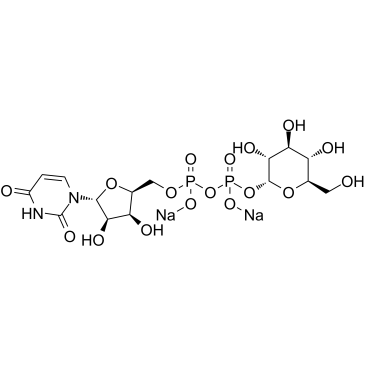
Uridine 5'-Diphosphoglucose Disodium Salt
- CAS No.28053-08-9
- GradeIndustrial / Pharmaceutical
- Availability● In Stock
High-purity Uridine 5'-Diphosphoglucose Disodium Salt for biochemical research and enzymatic synthesis. Reliable supply with full documentation.
Request Bulk PricingProduct Technical Details
Product Overview
Uridine 5'-Diphosphoglucose Disodium Salt, commonly referred to as UDP-Glucose or UDP-Glc, is a critical nucleotide sugar utilized extensively in biochemical research and pharmaceutical development. As an activated form of glucose, this compound plays a pivotal role in nucleotide sugar metabolism, serving as an essential substrate for various glucosyltransferases. Our manufacturing process ensures that each batch meets rigorous international standards for purity and stability, making it an ideal choice for laboratories and industrial applications requiring high-performance biochemical reagents.
This phosphorylated uridine derivative is fundamental in the study of glycosylation pathways and enzyme kinetics. By providing a reliable source of this key intermediate, we support advancements in metabolic engineering, drug discovery, and the characterization of specific enzymatic activities such as limonoid glucosyltransferase. Our commitment to quality ensures that researchers can depend on consistent results across multiple experiments.
Technical Specifications
We adhere to strict quality control protocols to guarantee the integrity of our chemical products. The following table outlines the key physical and chemical parameters for this grade of Uridine 5'-Diphosphoglucose Disodium Salt:
| Parameter | Specification |
|---|---|
| CAS Number | 28053-08-9 |
| Molecular Formula | C15H22N2Na2O17P2 |
| Molecular Weight | 610.27 g/mol |
| Appearance | White or off-white crystalline powder |
| Assay (HPLC) | ≥98.0% |
| Loss on Drying | ≤20% |
| pH Value | 3.0 - 5.0 |
Applications and Benefits
The versatility of Uridine 5'-Diphosphoglucose Disodium Salt makes it a valuable asset in multiple scientific domains. Primarily, it is employed as a substrate in enzymatic reactions where glucose transfer is required. This includes the biosynthesis of glycogen and various glycoconjugates. In the pharmaceutical sector, it serves as a vital intermediate in the development of novel therapeutics targeting metabolic disorders.
- High purity levels ensure minimal interference in sensitive enzymatic assays.
- Stable formulation allows for extended storage without significant degradation.
- Compatible with a wide range of biochemical protocols and buffer systems.
- Supports research into glucosyltransferase characterization and metabolic pathways.
Quality Assurance and Storage
Every production lot undergoes comprehensive testing using high-performance liquid chromatography (HPLC) to verify assay purity and identify potential impurities. We provide a Certificate of Analysis (COA) with every shipment to document compliance with specified parameters. To maintain optimal stability, the product should be stored in a cool, ventilated environment away from direct sunlight and moisture. Proper handling procedures should be followed to prevent contamination.
Packaging and Logistics
We understand the importance of secure packaging in preserving chemical integrity during transit. Standard packaging includes 25 kg drums, which are designed to protect the contents from physical damage and environmental exposure. However, we also offer flexible packaging solutions tailored to specific customer requirements, ensuring that both small-scale research teams and large-scale manufacturing facilities receive their materials in perfect condition. Contact our sales team for detailed information on bulk pricing and global shipping options.