6-Chloropicolinic Acid
- CAS No.4684-94-0
- GradeIndustrial / Pharmaceutical
- Availability● In Stock
High-purity 6-Chloropicolinic acid (CAS 4684-94-0), a key pyridine-based building block for advanced organic synthesis and pharmaceutical intermediates.
Request Bulk PricingProduct Technical Details
Product Overview
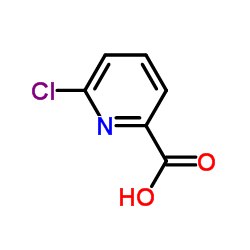
6-Chloropicolinic acid is a versatile halogenated heterocyclic carboxylic acid widely employed as a critical intermediate in the synthesis of agrochemicals, pharmaceuticals, and specialty fine chemicals. With its reactive chlorine substituent at the 6-position and carboxylic acid functionality at the 2-position of the pyridine ring, it serves as a valuable scaffold for cross-coupling reactions, nucleophilic substitutions, and derivatization pathways in modern medicinal chemistry.
Specifications
| Molecular Formula | C6H4ClNO2 |
|---|---|
| Molecular Weight | 157.555 g/mol |
| CAS Number | 4684-94-0 |
| Appearance | Off-white crystalline powder |
| Assay (Purity) | ≥98.0% |
| Melting Point | 190–191 °C |
| Boiling Point | 323.2 ± 22.0 °C at 760 mmHg |
| Density | 1.5 ± 0.1 g/cm³ |
| Flash Point | 149.3 ± 22.3 °C |
| Vapor Pressure | 0.0 ± 0.7 mmHg at 25 °C |
| Refractive Index | 1.590 |
Industrial Applications
As a foundational intermediate in organic synthesis, 6-Chloropicolinic acid is extensively utilized in the development of active pharmaceutical ingredients (APIs), crop protection agents, and functional materials. Its structural features enable efficient transformation into bidentate ligands, metal-chelating agents, and bioactive molecules through well-established synthetic protocols.
- Serves as a precursor for herbicides and plant growth regulators in agrochemical R&D
- Enables construction of complex nitrogen-containing scaffolds in drug discovery
- Compatible with palladium-catalyzed cross-coupling methodologies (e.g., Suzuki, Buchwald-Hartwig)
- Supports scalable, cost-effective manufacturing under standard industrial conditions
Stored in a cool, dry, and well-ventilated area, this compound is typically supplied in 25 kg fiber drums or customized packaging to meet global regulatory and logistical requirements.