Copper(I) Iodide
- CAS No.7681-65-4
- GradeIndustrial / Pharmaceutical
- Availability● In Stock
High-purity Copper(I) Iodide (CuI), CAS 7681-65-4, widely used as a catalyst in organic synthesis and as an additive in animal nutrition formulations.
Request Bulk PricingProduct Technical Details
Product Overview
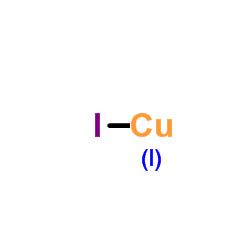
Copper(I) Iodide (CuI), also known as cuprous iodide, is an inorganic compound with the molecular formula CuI and a molecular weight of 190.45 g/mol. It appears as a gray crystalline powder that may darken upon exposure to light due to partial decomposition. This compound is insoluble in water and ethanol but readily dissolves in concentrated hydrochloric acid and sulfuric acid, making it suitable for specialized chemical processes.
Specifications
| Molecular Formula | CuI |
|---|---|
| Molecular Weight | 190.45 g/mol |
| CAS Number | 7681-65-4 |
| Iodine Content | ≥66% |
| Melting Point | 605 °C (lit.) |
| Boiling Point | 1290 °C |
| Density | 5.62 g/mL at 25 °C (lit.) |
| Refractive Index | 2.346 |
| Solubility in Water | Insoluble |
| Appearance | Gray powder, darkens on exposure to light |
| Stability | Stable under normal temperatures and pressures |
| Storage Conditions | Store in a tightly closed container in a cool, dry, well-ventilated area away from direct sunlight and incompatible substances |
Industrial Applications
Copper(I) Iodide serves primarily as a versatile catalyst in advanced organic synthesis, particularly in Ullmann-type coupling reactions, Sonogashira couplings, and other transition-metal-mediated transformations. Its role in facilitating carbon-heteroatom bond formation makes it invaluable in pharmaceutical and agrochemical intermediate manufacturing. Additionally, CuI is employed as a micronutrient source in animal feed additives to support metabolic functions and overall health in livestock. Historically, it has also found niche use in the production of anode ray tube covers due to its optical properties.
- High catalytic efficiency in cross-coupling reactions
- Essential copper source in animal nutrition formulations
- Light-sensitive—requires opaque or amber packaging for stability
- Compatible with large-scale industrial synthesis protocols