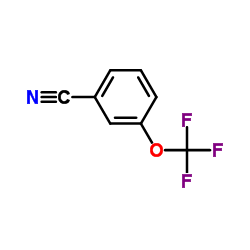
3-(Trifluoromethoxy)benzonitrile
- CAS No.52771-22-9
- GradeIndustrial / Pharmaceutical
- Availability● In Stock
High-purity 3-(Trifluoromethoxy)benzonitrile (CAS 52771-22-9), a versatile fluorinated aromatic intermediate for advanced organic synthesis in pharmaceutical and agrochemical R&D.
Request Bulk PricingProduct Technical Details
Product Overview
3-(Trifluoromethoxy)benzonitrile is a high-value fluorinated aromatic building block widely employed as a key intermediate in the synthesis of complex organic molecules. With its electron-withdrawing trifluoromethoxy and nitrile functional groups positioned meta to each other on the benzene ring, this compound offers unique reactivity and stability profiles essential for constructing bioactive scaffolds in medicinal chemistry and crop protection agents.
Specifications
| Molecular Formula | C8H4F3NO |
|---|---|
| Molecular Weight | 187.119 g/mol |
| CAS Number | 52771-22-9 |
| Appearance | Colorless to almost colorless clear liquid |
| Assay | ≥98.0% |
| Density | 1.3 ± 0.1 g/cm³ |
| Boiling Point | 178.1 ± 40.0 °C at 760 mmHg |
| Flash Point | 61.5 ± 27.3 °C |
| Vapor Pressure | 1.0 ± 0.3 mmHg at 25°C |
| Refractive Index | 1.461 |
Industrial Applications
This fluorinated benzonitrile derivative serves primarily as a specialty intermediate in multi-step synthetic routes. Its applications include:
- Construction of heterocyclic cores in pharmaceutical active pharmaceutical ingredient (API) development
- Synthesis of novel agrochemical compounds requiring enhanced metabolic stability
- Preparation of liquid crystals and electronic materials leveraging its rigid aromatic structure
- Use in cross-coupling reactions (e.g., Suzuki, Sonogashira) due to the robustness of the C–CN bond
Stored in a cool, well-ventilated area away from oxidizing agents, 3-(Trifluoromethoxy)benzonitrile is typically supplied in 200 kg drums or customized packaging to meet industrial-scale manufacturing demands. As a non-terminal, non-formulation chemical, it supports upstream synthesis rather than direct end-product formulation.